Shipping and logistics strategy for importers in a riskier trade environment
a[data-rs-seo-link]{text-decoration:underline!important;color:#1a56db!important;cursor:pointer!important;}a[data-rs-seo-link]{text-decoration:underline!important;color:#1a56db!important;cursor:pointer!important;}
What shipping and logistics now means for importers
For importers and exporters, shipping and logistics is no longer a late-stage exercise in finding the cheapest container, truck or air cargo space. It is a planning discipline that links trade demand, customs data, transport capacity, carbon compliance, cash flow and customer commitments. The practical goal is resilience: selecting routes, modes, documents and partners that keep cargo moving when freight rates, port conditions or regulations change.
For companies involved in international trade, the stronger approach is to build a lane-by-lane plan that compares cost, transit time, reliability, compliance exposure and recovery options before a shipment is already under pressure.
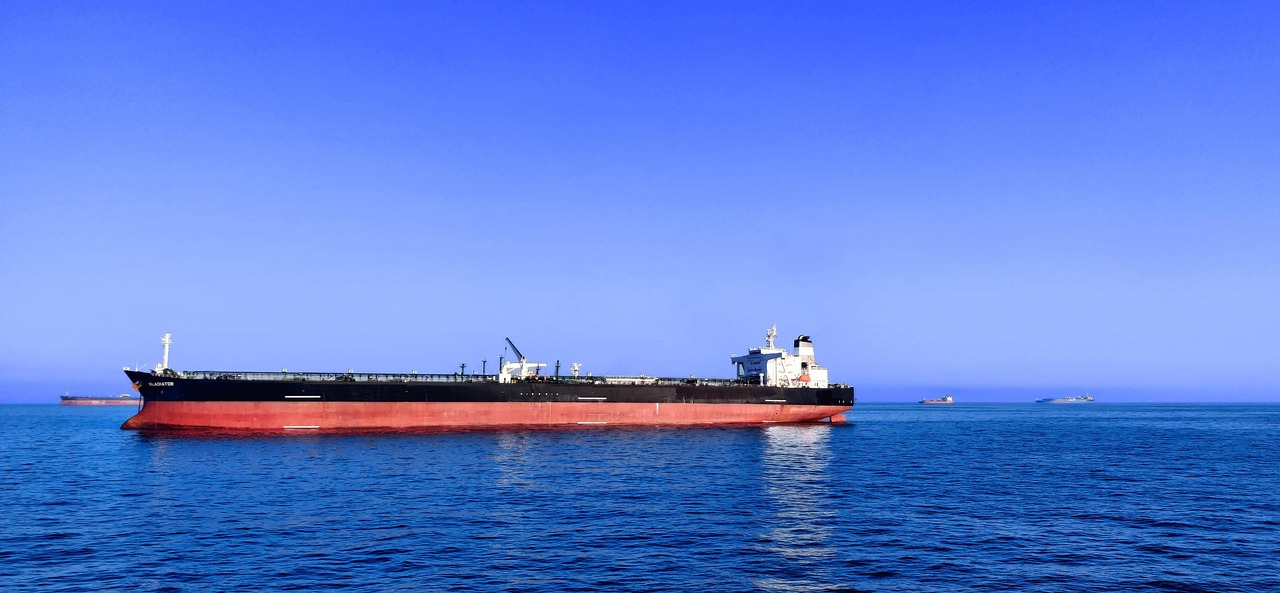
That shift matters because global trade growth is expected to be slower and more uneven. In its March 19, 2026 trade outlook, the World Trade Organization forecast that merchandise trade volume growth would slow to 1.9% in 2026 from 4.6% in 2025, with risks tied to energy prices and regional conflict scenarios. (wto.org) For more articles in this topic area, visit the Freight and Logistics section.
The risk map has moved from price to continuity
Freight buyers often used to separate procurement from risk management: first secure the rate, then deal with disruption if it appeared. That approach is weaker in a market shaped by route disruption, canal constraints, port congestion, security risks, weather volatility and regulatory change. A lower base rate may be poor value if it depends on a fragile route, weak documentation discipline or no credible recovery plan.
Chokepoints and route choices
Maritime chokepoints are now board-level supply chain concerns. UN Trade and Development’s 2024 Review of Maritime Transport focused on pressure around the Red Sea and Suez Canal, the Panama Canal and the Black Sea, noting that route disruption can raise freight rates and make schedules less predictable. UNCTAD also modeled how sustained container freight increases between October 2023 and June 2024 could pass through into consumer prices if the disruption persisted. (unctad.org)
The lesson for importers is not that every shipment needs an expensive alternative route. It is that each critical lane should have a defined trigger point. A trigger may be a maximum acceptable delay, a freight rate ceiling, an inventory threshold, a port closure notice or a customer service deadline. Once the trigger is reached, the team should already know whether to switch sailing strings, reroute through another port, split the shipment, move only high-value units by air, or delay non-urgent replenishment.
Air freight as a pressure valve, not a default
Air cargo can protect sales when inventory is short or ocean schedules are unreliable, but it is rarely a like-for-like substitute for ocean freight. It has different cost structures, weight and volume constraints, emissions implications, airport handling requirements and customs timing. IATA reported strong air cargo demand in recent market updates, helped in part by e-commerce and pressure on ocean shipping capacity, but that does not mean importers should move entire purchase orders by air. (iata.org)
A more disciplined method is to create an escalation ladder. Level one keeps cargo on the planned ocean service. Level two uses faster ocean options or port substitution. Level three splits orders so only urgent SKUs move by air. Level four uses full air freight for time-critical goods, spare parts, launch products or contractual recovery. This protects customer commitments without allowing emergency logistics to become a routine margin leak.
Compliance is now part of freight planning
International logistics decisions increasingly affect regulatory exposure. Carbon rules, customs classification, sanctions screening, forced-labor controls, product safety rules and digital reporting requirements can all change the true landed cost of a shipment. Treating compliance as post-booking paperwork can create avoidable delays, penalties and demurrage.
EU maritime carbon rules affect landed cost calculations
For cargo moving through European ports, maritime emissions regulation is already influencing carrier costs and contract language. The European Commission states that the EU Emissions Trading System has applied to maritime transport emissions since January 1, 2024. Shipping companies must surrender allowances in a phased approach: 40% of reported 2024 emissions by 2025, 70% of reported 2025 emissions by 2026, and 100% of reported emissions from 2027 onward. The Commission also notes that only CO2 was covered in 2024 and 2025, with methane and nitrous oxide entering the scope from 2026. (climate.ec.europa.eu)
FuelEU Maritime adds another layer. The regulation has applied fully from January 1, 2025, with targets designed to reduce the greenhouse gas intensity of energy used by ships above 5,000 gross tonnage calling at European ports, starting with a 2% reduction in 2025 and moving toward an 80% reduction by 2050. The same European Commission guidance describes future on-shore power or zero-emission technology obligations for passenger and container ships at berth in relevant EU ports from 2030 and more broadly from 2035 where port capacity exists. (transport.ec.europa.eu)
Importers do not need to become ship operators, but they do need to understand how carbon-related surcharges are calculated, whether they are fixed or floating, which voyages they cover, and how they are treated in long-term freight agreements. A useful contract review question is simple: does the quote explain the cost driver, the data basis and the adjustment mechanism, or does it only add a vague environmental surcharge?
Customs data will need earlier attention
Classification and product data are also moving upstream. The World Customs Organization says the HS 2028 edition will enter into force on January 1, 2028, after the seventh HS Review Cycle, and includes 299 sets of amendments reflecting changing trade patterns, technology, public health needs and environmental policy priorities. (wcoomd.org) That may seem distant, but importers with large SKU catalogs, multiple origin countries or automated customs systems should use 2026 and 2027 to map affected product groups, update master data and prepare brokers before the new codes take effect.
Good customs preparation is a logistics advantage. Accurate HS codes, country-of-origin records, product descriptions, values, licenses and restricted-party screening reduce border delays. Poor data forces brokers and carriers to correct entries under time pressure, which can turn a normal shipment into storage charges, missed delivery slots or customs exams.
How to compare modes and service models
Mode selection should start with the commercial promise behind the shipment. A seasonal retail order, a replacement machine part, a sample shipment, an e-commerce replenishment and a bulk raw-material movement have different risk profiles. The following comparison helps teams select a service model before they request quotes. See also: Customs and Compliance.
| Option | Best fit | Main advantage | Main limitation | Planning question |
|---|---|---|---|---|
| Ocean FCL | Predictable volume and larger orders | Lower unit cost and stronger control of container loading | Exposure to sailing delays, blank sailings and port congestion | Can inventory absorb a one- to two-week disruption? |
| Ocean LCL | Smaller shipments and mixed suppliers | Flexibility without filling a container | More handling, consolidation time and documentation complexity | Is the saving worth the extra touchpoints? |
| Air cargo | High-value, urgent or launch-critical goods | Speed and schedule recovery | High cost and capacity sensitivity | Which SKUs truly justify air freight? |
| Road or rail | Regional trade and port-to-inland movement | Control over inland delivery windows | Border, driver, equipment and infrastructure constraints | Is the inland leg planned as carefully as the ocean leg? |
| Multimodal routing | Complex lanes needing flexibility | Balanced cost, speed and resilience | Requires strong coordination and visibility | Who owns exceptions across mode changes? |
The table also shows why freight procurement should not be evaluated only on the quoted rate. A lane with a slightly higher freight cost may produce a lower total cost if it avoids demurrage, missed production, emergency air freight, compliance rework or customer penalties.
Digital documents and visibility are becoming operational controls
Digitalization is not only a technology project; it is a risk-control issue. Paper documents, manual data re-entry and disconnected platforms slow down international trade. They also create inconsistent shipment data, which affects customs filings, bank document checks, cargo release and claims management.
The electronic bill of lading is one of the clearest examples. DCSA member carriers have committed to issuing 50% of bills of lading digitally within five years and 100% by 2030. DCSA also reported that in June 2026 five electronic bill of lading providers adopted version 2 of its interoperability standard annex and received approval from the International Group of P&I Clubs, following an earlier live interoperable transaction in May 2025. (dcsa.org)
For importers, the value is not only faster documentation. The larger gain is cleaner data flow among exporters, forwarders, carriers, banks, insurers and customs brokers. A digital document still needs legal acceptance, internal controls and partner adoption, but it can reduce courier delays, lost originals and last-minute release problems. Companies should identify lanes where document delays regularly hold cargo and test digital alternatives with banks, carriers and forwarders that already support them.
Visibility deserves the same practical treatment. A tracking platform is useful only if the team defines what happens when an exception appears. The World Bank’s Logistics Performance Index measures logistics performance through areas such as customs efficiency, infrastructure, international shipments, logistics competence, tracking and tracing, and timeliness. (datacatalog.worldbank.org) That framework is a useful reminder: visibility is one part of performance, not a substitute for customs quality, infrastructure choices or reliable execution.
A practical workflow for import and export teams
A resilient shipping and logistics process can be built in seven steps. First, classify lanes by commercial importance, not only annual freight spend. A low-volume lane may be critical if it supplies production parts or contractual customer orders. Second, calculate landed cost with freight, duties, taxes, insurance, inland transport, carbon surcharges, storage risk and finance cost. Third, define normal and emergency modes for each lane.
Fourth, standardize shipment data before booking. Product descriptions, HS codes, values, origin, Incoterms, packing data and restricted-party checks should be ready before goods leave the supplier. Fifth, agree exception triggers with forwarders and carriers, including who can approve rerouting, air conversion or extra storage. Sixth, review contracts for surcharge transparency, free time, detention and demurrage terms, force majeure language and carbon-cost pass-through. Seventh, run a monthly lane review covering actual transit time, landed cost variance, document errors, customs holds and recovery actions.
This workflow is deliberately practical. It does not require every importer to build a global control tower. It requires the business to know which shipments matter most, what can go wrong, how much delay it can tolerate, and who has authority to act. That is the difference between buying freight reactively and managing logistics as a trade capability.
Frequently asked questions
What is the difference between shipping and logistics?
Shipping usually refers to the physical movement of goods by ocean, air, road, rail or parcel networks. Logistics is broader. It includes planning, documentation, inventory positioning, customs coordination, carrier management, warehousing, visibility, exception handling and final delivery performance.
How should importers choose between ocean and air freight?
Start with the cost of delay, not only the freight rate. Ocean freight is usually better for planned volume and lower unit cost. Air freight is better for urgent, high-value or shortage-sensitive cargo. Many companies use a split-shipment approach so only the most urgent items move by air while the balance remains on ocean services.
Do carbon rules affect shippers if carriers are responsible for vessels?
Yes, indirectly. Regulations such as the EU ETS and FuelEU Maritime apply to shipping companies and vessels, but their costs and operational effects can flow into freight rates, surcharges, routing choices and contract terms. Importers should ask how carbon-related charges are calculated and whether they change during the contract period.
Why are digital bills of lading important?
They can reduce delays caused by paper originals, courier movement and document mismatches. Their value depends on legal recognition, platform interoperability and adoption by carriers, banks, forwarders and cargo owners. Importers should begin with lanes where document release delays create measurable cost or service risk.