Global trade import export documentation risks to control in 2026

a[data-rs-seo-link]{text-decoration:underline!important;color:#1a56db!important;cursor:pointer!important;}a[data-rs-seo-link]{text-decoration:underline!important;color:#1a56db!important;cursor:pointer!important;}
What global trade import export documentation must solve now
For teams working in global trade import export, documentation is no longer a back-office formality. It is the evidence file that customs authorities, banks, freight providers and buyers use to decide whether goods can move, be paid for and qualify for the duty treatment claimed. The WTO’s October 2026 trade update points to resilient merchandise trade, with world merchandise trade volume forecast to grow 3.9% in 2026 and 4.1% in 2027. The same outlook also makes clear that growth is uneven and exposed to policy, energy, transport and technology shocks. That puts more pressure on document quality, not less.
Importers and exporters need consistent product descriptions, HS codes, origin evidence, Incoterms, transport records and audit trails before cargo reaches the border. This article focuses on practical trade documentation controls rather than legal advice. For more articles in this area, visit the Trade Documentation section.
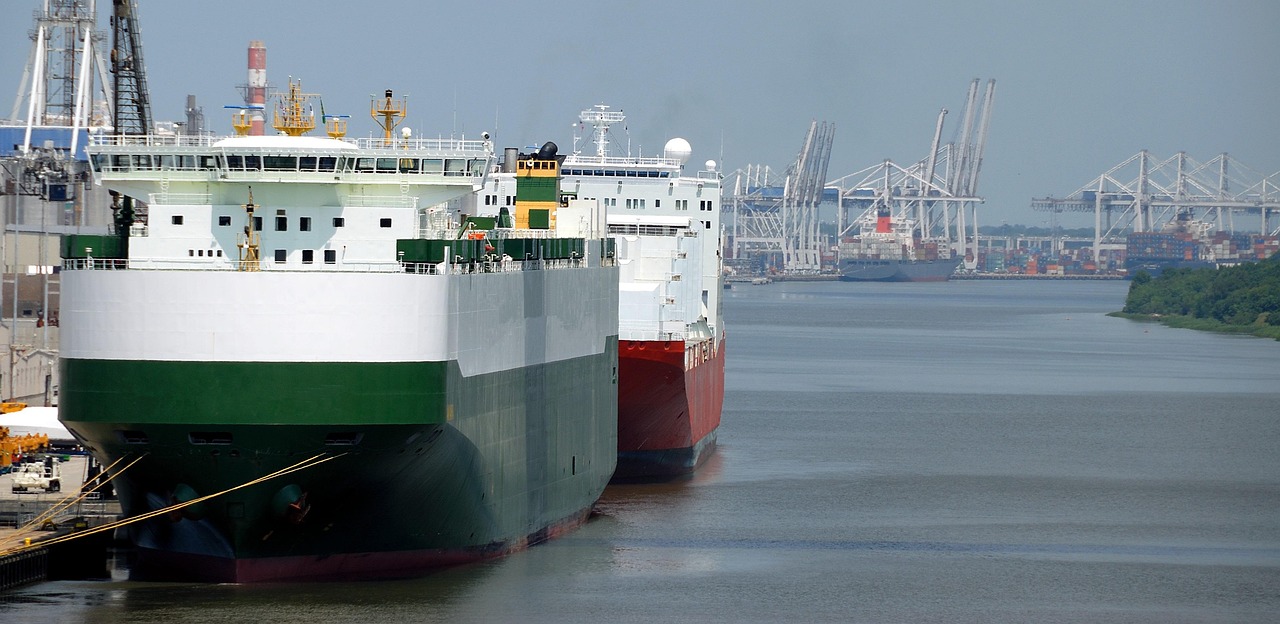
Why paperwork risk is rising even when trade is growing
The latest official trade data does not show a simple return to normal. The WTO’s 8 October 2026 update says strong demand for AI-enabling goods, including semiconductors and servers, accounted for 47% of global merchandise trade growth in the first half of 2026. At the same time, the WTO lowered its outlook for commercial services trade because conflict-related effects weighed on transport and travel. In practical terms, goods trade is expanding, but routes, sectors and regional exposure are shifting.
Those shifts often create documentation mismatches. A product may move through a new port, use a new supplier, depend on a different preferential trade agreement or require a different security filing. If the commercial invoice, packing list, transport document and customs declaration do not tell the same story, border authorities may request clarification, inspect the shipment or reassess duty. Delays can happen even when the goods are legitimate and the buyer is ready to receive them.
Classification change is another reason to review documentation now. The World Customs Organization says HS 2028, the eighth edition of the Harmonized System, will enter into force on 1 January 2028. Compared with HS 2022, the WCO describes six new headings and 428 new subheadings, with five headings and 172 subheadings deleted. This is not a 2026 filing requirement, but it is a 2026 planning issue for companies with large product databases, complex bills of materials or automated trade systems.
The core document set and what each item proves
Many documentation errors start when companies treat each document as a separate form instead of part of one connected evidence file. A customs authority, bank, insurer or buyer may read different documents for different purposes, but the documents still need to support the same transaction narrative.
| Document | Main purpose | Common risk to control |
|---|---|---|
| Commercial invoice | States seller, buyer, goods, value, currency, terms and transaction details | Descriptions are too vague to support classification, valuation or licensing checks |
| Packing list | Shows quantities, weights, packaging and marks | Weight, package count or item references differ from the invoice or bill of lading |
| Transport document | Evidence of carriage and, for some bills of lading, control over goods | Consignee, notify party, ports or cargo description do not match other records |
| Certificate or statement of origin | Supports non-preferential or preferential origin claims | Origin claim is not backed by supplier declarations or production records |
| Customs declaration | Reports classification, value, origin and regulatory data to authorities | Data is copied from incomplete commercial records without review |
| Licenses and product certificates | Shows compliance with controls for regulated goods | Certificate scope does not match the exact product, market or shipment |
| Insurance and inspection records | Supports risk transfer, claims and quality checks | Coverage or inspection timing conflicts with the agreed delivery term |
The table is intentionally basic because these are the fields that often decide whether a shipment is cleared without avoidable questions. Advanced compliance systems still depend on accurate product master data, clear buyer-seller terms and reliable evidence from suppliers.
Five controls that prevent common import and export delays
Control product classification before the purchase order
HS classification is not just a customs broker task at the end of the shipment. It affects duty, trade remedies, quotas, certificates, export controls and origin calculations. A safer workflow is to classify goods before the sales contract or purchase order is finalized, then keep a record of the reasoning, supporting technical data and any binding rulings or local guidance used. For products likely to be affected by HS 2028, companies should start mapping current codes against WCO correlation information and national tariff updates well before 1 January 2028.
Make Incoterms match the operational reality
The International Chamber of Commerce’s Incoterms 2020 rules remain the current widely used ICC trade terms. They allocate responsibilities for delivery, risk, costs and certain export or import clearance obligations, but they do not replace the sales contract, transfer title automatically or decide every customs question. A common documentation problem is choosing a term because it is familiar, not because it fits the route. For example, the party arranging main carriage must ensure the bill of lading or other transport record can be issued in a form that supports payment and release of goods.
Separate country of origin from shipping route
Origin is often misunderstood. The country from which goods are shipped is not always the country of origin. Preferential origin may depend on tariff shift rules, regional value content, specific processing or direct transport conditions. Non-preferential origin may follow a different rule. A reliable file should contain supplier declarations, bills of materials, production location evidence and the origin rule applied. If only a certificate is retained, the company may struggle to defend the claim later.
Check valuation evidence before customs filing
Customs value usually starts with the transaction value, but the supporting evidence can include assists, royalties, commissions, freight, insurance and related-party considerations depending on local law. Documentation teams should not assume the invoice price is always enough. A clear valuation file should explain what is included, what is excluded and why. If customs later asks for evidence, the answer should not depend on reconstructing emails months after import.
Build license and controls screening into document creation
Regulated goods need more than accurate commercial details. Dual-use items, chemicals, food, medical products, agricultural goods and strategic technologies may require export licenses, import permits, safety certificates or end-use statements. Screening should take place before booking shipment, not after cargo is loaded. Where required, the document set should show the product, end user, destination, intended use and license reference.
Digital documentation is advancing, but legal recognition still matters
Trade documentation is moving toward digital exchange, but digital does not automatically mean valid, interoperable or accepted. The WTO Trade Facilitation Agreement encourages measures such as publication of information online, electronic payment and single-window submission for import, export and transit documentation. These reforms can reduce repeated data entry when implemented well, but they do not remove the need for accurate source data. See also: Customs and Compliance.
Electronic bills of lading and other transferable records are also gaining attention. UNCITRAL adopted the Model Law on Electronic Transferable Records on 13 July 2017 to enable electronic records that are functionally equivalent to paper transferable documents, including bills of lading, promissory notes and warehouse receipts. The model is important because many trade documents historically depended on possession of a paper original. Without legal recognition of electronic control, a digital file may not perform the same commercial function.
The ICC Digital Standards Initiative has also highlighted a practical obstacle: global trade still relies on many official and commercial documents, and digitalization is slowed by fragmented standards and legal systems that do not fully recognize electronic records. For importers and exporters, the practical takeaway is to adopt digital documents where counterparties, banks, carriers and local law support them, while keeping a documented fallback process for jurisdictions or transactions that still require paper.
A practical workflow for reviewing cross-border documents
A strong workflow does not need to be complicated. It needs clear ownership, timing and exception handling. The following sequence is suitable for many small and mid-sized trading businesses, as well as larger companies reviewing gaps in their current process.
- Start with product master data. Confirm product description, SKU, composition, technical specifications, HS code, origin rule and regulatory status before shipment planning.
- Align the contract terms. Check Incoterms, payment method, delivery point, inspection requirements, insurance responsibility and document presentation rules.
- Create one transaction data set. Use the same quantities, weights, values, parties and locations across the invoice, packing list, booking instruction and customs data.
- Review origin and preference claims. Confirm that supplier evidence supports the origin statement and that the destination market accepts the format used.
- Screen for licenses and restrictions. Check product controls, destination restrictions, sanctions exposure, end-use concerns and certificate requirements before loading.
- Verify transport documents before release. Confirm shipper, consignee, notify party, ports, container numbers, marks and cargo description before originals or electronic records are issued.
- Archive the evidence file. Retain the documents, approvals, classification notes, origin support and communications needed to explain the shipment later.
The most useful improvement is often a pre-shipment document review checkpoint. It is less expensive to correct an invoice description, missing license reference or inconsistent consignee before departure than to solve the same issue during customs clearance.
What to prioritize for the rest of 2026
Trade teams should treat the rest of 2026 as a preparation period for more data-driven customs and logistics processes. Three actions deserve priority. First, identify products with high duty exposure, frequent customs questions, controlled characteristics or likely HS 2028 changes. Second, review document templates so they capture the data that customs, banks and logistics partners actually need. Third, test whether electronic document processes are legally and operationally accepted in the trade lanes that matter most.
For many companies, the weakness is not the absence of documents but the weak connection between them. A shipment file may contain an invoice, packing list, certificate and bill of lading, yet still fail because the product description differs, the origin claim is unsupported or the delivery term contradicts who arranged carriage. Better documentation is not about producing more paper. It is about producing a coherent evidence chain that each party in the cross-border transaction can read quickly.
Frequently asked questions
What is the most important document in an import or export shipment?
There is no single universal answer. The commercial invoice is often central because it states the transaction value and goods description, but customs clearance, payment and cargo release may depend equally on the packing list, transport document, origin proof and any required certificates. The key is consistency across the full document set.
Do Incoterms decide who is responsible for customs duties?
Incoterms help allocate responsibilities between seller and buyer, including certain export or import clearance obligations, depending on the rule used. They do not override customs law, tax law or the need for accurate declarations. The sales contract should make duty, tax and documentation responsibilities clear.
Are electronic bills of lading accepted everywhere?
No. Acceptance depends on the legal framework, platform, carrier, bank, insurer and counterparties involved. UNCITRAL’s model law provides a framework for electronic transferable records, but adoption and operational readiness vary by jurisdiction and trade lane.
Why should companies prepare for HS 2028 in 2026?
HS 2028 does not enter into force until 1 January 2028, but classification changes can affect tariff databases, ERP systems, broker instructions, origin calculations and product compliance checks. Companies with many SKUs need time to map current codes, test systems and train staff before implementation.