Foreign trade export and import compliance checklist for smoother customs clearance
a[data-rs-seo-link]{text-decoration:underline!important;color:#1a56db!important;cursor:pointer!important;}a[data-rs-seo-link]{text-decoration:underline!important;color:#1a56db!important;cursor:pointer!important;}
What foreign trade export and import compliance means in practice
Foreign trade export and import compliance is the operating discipline that links a sales order to customs clearance, payment, delivery and audit defense. In practice, it means confirming who is responsible for export and import tasks, classifying the product, supporting origin, declaring value correctly, screening the parties and destination, and keeping a complete shipment file before the goods leave.
This matters more in 2026 because global goods trade is still expanding while customs administrations are asking for cleaner data earlier in the shipment cycle. WTO economists raised their 2026 merchandise trade volume growth forecast to 3.9% on October 8, 2026, while also noting that gains are uneven and exposed to policy and regional risks. (wto.org)
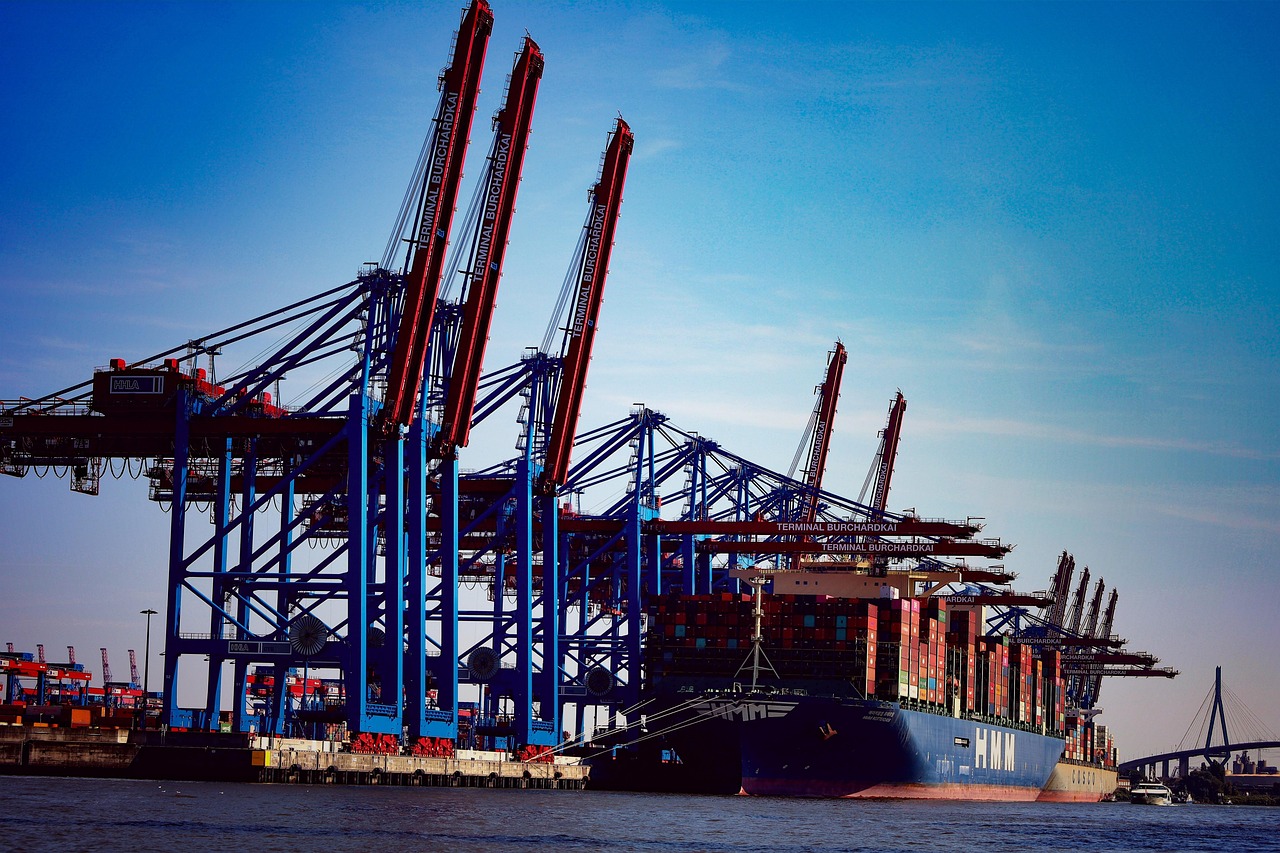
The main compliance lesson is straightforward: customs clearance should not begin when the truck reaches the port or airport. It should begin when the buyer, seller, product, route, price and delivery term are first known. For related updates and background, see the Customs and Compliance section.
Set responsibilities before quoting the shipment
Many customs problems start with a commercial misunderstanding rather than a customs form. A seller may quote a delivered price without checking whether it can act as importer of record. A buyer may assume the supplier will handle export licensing even though the contract is silent. Freight may be booked under a delivery term that does not match the payment, insurance or customs plan.
Incoterms® 2020 rules, published by the International Chamber of Commerce, are widely used to define delivery-related tasks, costs and risks between sellers and buyers. ICC guidance also stresses that parties should state the chosen rule and named place clearly in the contract. Incoterms do not replace customs law, transfer title, determine payment terms or remove licensing obligations, but they do help allocate operational responsibility. (iccwbo.fr)
| Decision point | Why it matters for customs | Practical control |
|---|---|---|
| Importer of record | The importer is usually responsible for the accuracy of import declarations, duties, taxes and admissibility data. | Name the importer before booking transport and verify local registration requirements. |
| Exporter of record | The exporter may be responsible for export declarations, export licenses and sanctions screening. | Confirm who can legally export from the country of departure. |
| Delivery term | The term affects who arranges carriage, insurance and customs actions at different points. | Use the exact Incoterms rule, named place and year in the sales contract. |
| Declared value | Customs value drives duties, taxes and audit exposure. | Align the commercial invoice, purchase order, payment records and freight or insurance treatment. |
Build the customs data file before the goods move
A reliable customs file is built around three core data elements: classification, origin and value. Product classification normally starts with the Harmonized System. The World Customs Organization describes HS 2022 as the seventh edition of the Harmonized System nomenclature used worldwide for the uniform classification of internationally traded goods. National tariff schedules then add country-specific digits, duty rates, measures and notes. (wcoomd.org)
HS classification and product descriptions
A customs description should make clear what the product is, what it is made of, what it does and how it is used. Vague descriptions such as ‘parts,’ ‘samples,’ ‘gift,’ ‘accessories’ or ‘tools’ slow clearance because they do not support classification or admissibility checks. A better control is to maintain a product master file that links each item number to a technical description, HS code, country of origin, valuation basis and any agency requirements.
Origin and preferential claims
Country of origin is not always the country of shipment. It may depend on where the product was wholly obtained, substantially transformed or qualified under a specific trade agreement. If a buyer claims a preferential duty rate, the shipment file should include the rule of origin analysis, supplier declarations, bills of materials and any required certificate or statement of origin. A preference claim without supporting records can lead to duty, penalty and customer disputes after delivery.
Value, assists and related costs
The invoice price is only the starting point for customs valuation in many jurisdictions. Companies should check whether tooling, molds, design work, royalties, commissions, packing, assists, freight or insurance must be included or separately shown. A practical control is to compare the purchase order, commercial invoice, payment record, freight invoice and customs entry before filing. Differences are not always wrong, but unexplained differences are common audit triggers.
Use documents that support the declaration
Trade documents should tell the same story. The U.S. International Trade Administration lists commonly used export documents such as the commercial invoice, packing list, certificate of origin and transport documents, and explains that customs authorities often use the commercial invoice to determine duties. The same source notes that a packing list is not a substitute for a commercial invoice, although it can help customs officials check the cargo. (trade.gov)
- Commercial invoice: Include seller, buyer, consignee, detailed goods description, quantities, price, currency, origin, delivery term and payment terms.
- Packing list: Show carton, pallet or crate details, weights, dimensions, marks and package counts.
- Transport document: Use the bill of lading, sea waybill, air waybill, truck bill or rail document that matches the shipment route.
- Origin document: Use certificates or declarations only when required or when claiming a trade agreement benefit.
- Product certificates: Add safety, health, conformity, phytosanitary, chemical, dual-use or environmental documents when the destination market requires them.
Good documentation is not about adding more paper. It is about making the data consistent enough for a broker, carrier, bank, buyer, customs officer or auditor to understand the transaction without guessing.
Check export controls before booking transport
Export compliance is not limited to weapons, military items or obvious high-risk goods. It can also apply to software, technology, electronics, chemicals, sensors, industrial equipment, spare parts and technical data. A basic export review should answer five questions: what the item is, where it is going, who will receive it, how it will be used and whether any restricted-party or embargo rule applies.
In the United States, the Census Bureau explains that Electronic Export Information can be filed through the Automated Export System, or an authorized agent can file it on the exporter’s behalf. Census guidance also says the AES proof of filing citation should be annotated on commercial loading documents and that a copy of the EEI and related documentation should be kept for five years. This is a U.S.-specific example, but it illustrates a broader principle: export declarations and records should be treated as compliance evidence, not clerical afterthoughts. (census.gov)
A practical exporter control is to create a pre-booking hold point. No shipment should be released to the forwarder until classification, license determination, sanctioned-party screening, destination review and end-use review are complete. If the product is controlled, the file should show the license, exception, authorization or documented reason why no license was required. See also: Freight and Logistics.
Plan import clearance beyond duty rates
Import planning often starts with duty, but duty is only one part of landed cost and compliance risk. Importers should also check value-added tax or goods and services tax, customs fees, anti-dumping or countervailing duties, product standards, labeling, licenses, quotas, packaging rules, product safety filings and post-entry audit obligations. Customs authorities are also becoming more data-driven. U.S. Customs and Border Protection describes the Automated Commercial Environment as a system that modernized trade processing across cargo release, post-release, export and partner government agency functions. (help.cbp.gov)
Recent policy changes show why import rules need regular review. For the United States, CBP guidance on Executive Order 14324 states that, effective August 29, 2025, duty-free de minimis treatment under 19 U.S.C. § 1321(a)(2)(C) was no longer available for covered shipments entering the country, including international mail. (help.cbp.gov) In the European Union, the European Commission states that the Carbon Border Adjustment Mechanism moved from its 2023-2025 transitional phase to its definitive regime on January 1, 2026. (taxation-customs.ec.europa.eu)
The EU is also moving toward a more centralized customs data model. The Council of the European Union says the reformed customs framework will make use of an EU Customs Data Hub, with mandatory use for e-commerce businesses from July 1, 2028, and for all traders from March 1, 2034. (consilium.europa.eu) For traders, the operational message is that customs data quality will matter earlier in the import cycle, not after arrival.
A practical pre-shipment workflow
The most useful compliance process is short enough to use before every shipment, but complete enough to catch material risk. The following workflow can be adapted by importers, exporters, brokers and logistics teams.
- Confirm the parties: Identify seller, buyer, consignee, end user, exporter of record and importer of record.
- Screen the transaction: Review sanctioned parties, embargoed destinations, unusual routing and red flags about end use.
- Classify the goods: Assign HS codes and, where relevant, export control classifications.
- Verify origin: Separate non-preferential origin from free trade agreement qualification.
- Calculate value: Review price, assists, royalties, commissions, packing, freight and insurance treatment.
- Match documents: Check that invoices, packing lists, transport documents and certificates describe the same goods.
- Retain records: Store the declaration, supporting documents, communications and approval notes for the required retention period.
This workflow does not replace local legal, customs broker or tax advice. It does, however, reduce avoidable errors by requiring the transaction team to answer the same essential questions before cargo is in motion.
Common errors and better controls
| Common error | Likely consequence | Better control |
|---|---|---|
| Using a general product description | Customs delay, inspection or classification challenge | Use technical descriptions supported by specifications or catalog data. |
| Choosing Incoterms without checking local capability | Unexpected tax registration, import responsibility or delivery cost | Confirm exporter and importer roles before the quote is accepted. |
| Claiming origin preference without records | Retroactive duty, penalties or customer chargebacks | Keep supplier declarations, origin calculations and certificates in the shipment file. |
| Leaving license checks to the forwarder | Shipment hold, violation risk or contract breach | Complete export control review before booking transport. |
| Treating customs data as a broker-only task | Inaccurate declarations based on incomplete commercial data | Give brokers verified product, value, origin and party data before filing. |
Frequently asked questions
What is the first compliance step in a foreign trade export and import transaction?
The first step is to identify the legal roles: exporter of record, importer of record, buyer, seller, consignee and end user. Once those roles are clear, the parties can assign responsibility for classification, licenses, documents, duties, taxes and recordkeeping.
Is the HS code enough for customs compliance?
No. The HS code is essential, but customs compliance also depends on origin, value, product admissibility, licensing, documentation, party screening and local filing rules. A correct HS code can still be paired with an incorrect value, unsupported origin claim or missing import permit.
Do Incoterms decide who pays import duty?
Incoterms help allocate delivery tasks, costs and risks between seller and buyer, but customs law determines who can act as importer and who is legally responsible for import declarations. The sales contract should align the Incoterms rule with the actual import plan.
How long should trade records be kept?
Record retention periods vary by jurisdiction and document type. A practical policy is to follow the longest applicable period for customs, tax, export control and commercial claims, and to keep the declaration together with the documents and approvals that supported it.
Why are customs authorities asking for more data before arrival?
Earlier data helps authorities assess revenue, safety, security, admissibility and enforcement risks before goods arrive. For traders, that means weak product descriptions, inconsistent invoices and late license checks are more likely to cause delays than in a paper-based process.