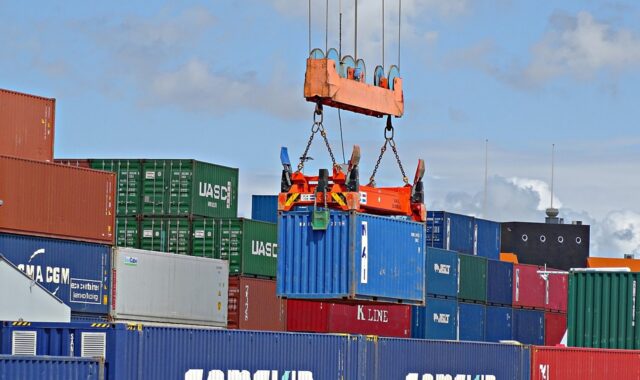
Trade documents list for import and export shipments

a[data-rs-seo-link]{text-decoration:underline!important;color:#1a56db!important;cursor:pointer!important;}a[data-rs-seo-link]{text-decoration:underline!important;color:#1a56db!important;cursor:pointer!important;}
What belongs on a trade documents list?
A practical trade documents list covers the documents and data needed to sell the goods, move the shipment, clear customs, prove origin, meet product controls and receive payment. The exact set depends on the product, destination country, transport mode, Incoterms rule, payment method and whether the goods are regulated. Most international shipments still start with a core file: a commercial invoice, packing list, transport document, customs declaration, proof of origin when required, and any licence, permit or certificate required by the importing or exporting country.
For companies building a repeatable checklist, it is safer to group documents by function rather than treat them as one pile of paperwork. Each document answers a different question: what was sold, what is packed, who carries it, where it originated, how it is classified, and whether it is legally allowed to move. More articles in this topic area are available in our Trade Documentation section.
The core trade documents most shipments need
The following documents appear in many import and export transactions. They are not mandatory in every case, but they are common enough to form the backbone of a trade documentation checklist.
| Document | Main purpose | Usually used by | Common risk if wrong |
|---|---|---|---|
| Commercial invoice | States the seller, buyer, goods, price, currency, Incoterms rule, origin details and other sale information | Customs, buyer, bank, freight forwarder | Customs valuation delays, payment mismatch, duty errors |
| Packing list | Shows how goods are packed, including carton count, weights, dimensions and package marks | Carrier, warehouse, customs, buyer | Inspection delays, cargo discrepancy, warehouse receiving disputes |
| Transport document | Evidence that the carrier or forwarder received the goods for transport | Carrier, consignee, bank, customs broker | Release problems, title or delivery disputes, demurrage risk |
| Customs declaration | Declares shipment data to the export or import customs authority | Exporter, importer, customs broker, authority | Penalties, holds, rejected entries, incorrect duty or tax |
| Certificate or proof of origin | Supports the country of origin and, where applicable, preferential tariff treatment | Customs, chambers of commerce, importer | Loss of tariff preference, post-clearance audit exposure |
| Licence, permit or product certificate | Proves permission or conformity for controlled goods | Regulators, customs, importer | Shipment refusal, seizure, re-export or destruction |
| Insurance certificate or policy | Shows cargo insurance coverage where required by contract or risk management policy | Buyer, seller, bank, insurer | Uninsured loss, letter of credit discrepancy |
| Payment document | Supports payment under a letter of credit, documentary collection or open-account process | Bank, seller, buyer | Delayed payment or rejected bank presentation |
Customs authorities such as U.S. Customs and Border Protection, and government trade guidance in the United Kingdom, commonly identify the invoice, packing details, shipping documents and any special permits or certificates as central evidence for clearance. For traders, the practical point is that a document may still be needed to prove value, quantity, classification, origin or admissibility even when it is not required for every entry.
Commercial and sales documents
Commercial documents describe the transaction between seller and buyer. They also supply data reused by freight forwarders, banks, customs brokers and insurers. Errors at the sales-document stage often spread across the shipment file, so these records should be checked before transport and customs documents are prepared.
Pro forma invoice
A pro forma invoice is usually issued before the final commercial invoice. It may be used for a quotation, import licence application, advance payment, customs estimate or buyer approval. It should not be treated as a substitute for the final invoice unless a customs authority or contract allows a substitute document in specific circumstances.
Commercial invoice
The commercial invoice is one of the most important documents in international trade. It normally identifies the seller and buyer, invoice number and date, full goods description, quantity, unit value, total value, currency, Incoterms rule, country of origin, HS code if used, payment terms and shipment references. The goods description should be specific enough for classification and admissibility checks. Vague descriptions such as “parts,” “samples” or “accessories” increase the chance of customs questions.
Packing list
The packing list is operational rather than financial. It should match the invoice, but its focus is package-level detail: number of cartons, pallet count, net and gross weight, measurements, package marks and the contents of each package where necessary. Customs officers, warehouse teams and buyers use it to check whether the physical cargo matches the declared shipment.
Sales contract or purchase order
The sales contract or purchase order sets the commercial basis for the shipment. It should align with the invoice on product description, price, quantity, delivery terms, payment terms and responsibility for documents. If a later document conflicts with the contract, the issue may become a commercial dispute rather than a simple paperwork correction.
Transport documents by mode of shipment
Transport documents show that goods have been handed to a carrier or forwarder and define how the cargo will be delivered. The correct document depends on whether the shipment moves by sea, air, road, rail or multimodal transport.
Bill of lading for sea freight
A bill of lading can serve several functions: receipt of goods, evidence of the carriage contract, and in some forms a document of title. If the bill is negotiable, control of the original document can affect control of the cargo. For sea shipments under a letter of credit, banks examine bill of lading details closely, including the named shipper, consignee, notify party, port of loading, port of discharge, vessel, shipment date and whether the document is clean.
Sea waybill
A sea waybill is often used when the buyer does not need a negotiable document of title, for example where the seller and buyer have an established relationship. It can simplify release because original presentation is usually not required in the same way as a negotiable bill of lading. The trade-off is that it does not provide the same control mechanism as an original negotiable bill.
Air waybill
An air waybill is used for air cargo. It is a receipt and carriage document, not a negotiable title document. Because air shipments move quickly, document accuracy should be settled before departure whenever possible. Missing consignee details, incorrect airport codes or unclear goods descriptions can quickly lead to storage costs and release delays.
Road, rail and multimodal documents
Road shipments may use a CMR consignment note in relevant international road transport contexts. Rail and multimodal shipments use their own transport documents depending on route, operator and legal framework. For any mode, the main control is consistency: names, weights, package counts, marks and references should match the invoice and packing list.
Customs, origin and regulatory documents
Customs and regulatory documents answer a different question from commercial documents: whether the shipment can legally leave one country and enter another. They also affect duty, tax, controls and inspection priorities.
Customs export and import declarations
A customs declaration contains structured data submitted to the relevant customs authority. It may include exporter and importer identifiers, commodity classification, customs value, origin, procedure code, transport references, licence numbers and duty or tax data. In many countries, declarations are filed electronically by a broker, declarant or authorised representative. Traders should still review the source documents, because a broker can only file accurately when the underlying data is complete and consistent.
Certificate of origin and origin statements
Origin documents can be non-preferential or preferential. A non-preferential certificate of origin may be needed for trade remedies, marking, import controls or buyer requirements. Preferential origin evidence supports reduced or zero duty under a trade agreement, but only if the goods meet the specific rules of origin. A statement on origin, EUR.1 movement certificate or other origin proof may be accepted depending on the agreement and country. Origin is not always the same as the country of shipment; it is based on manufacturing, processing and the applicable origin rules. See also: Customs and Compliance.
Licences, permits and controlled goods certificates
Some goods require documents beyond the usual invoice and transport paperwork. Examples include export licences for dual-use items, import permits for controlled products, phytosanitary certificates for certain plant products, veterinary or health certificates for certain animal products, dangerous goods declarations, conformity certificates, and fumigation or wood packaging evidence where applicable. These requirements vary by product and country, so they should be confirmed before the goods are packed.
Payment and insurance documents
Payment terms can change the trade documents list substantially. Under open account, the buyer may pay after shipment based mainly on the invoice and agreed credit terms. Under documentary collection or a letter of credit, banks examine documents against formal instructions, not against the physical goods. A small discrepancy can delay payment even when the cargo itself is correct.
For a letter of credit, the document set may include a commercial invoice, packing list, bill of lading or air waybill, certificate of origin, insurance certificate, inspection certificate and beneficiary certificates required by the credit. The wording, dates, names and shipment details must match the credit requirements closely. Teams should avoid adding unnecessary statements to bank documents, because extra wording can create avoidable discrepancies.
Cargo insurance documents matter when the contract or Incoterms allocation requires insurance. Under CIF and CIP, for example, the seller has an insurance obligation under the Incoterms 2020 framework published by the International Chamber of Commerce. Even where insurance is not contractually required from one party, the buyer or seller may arrange coverage as a risk management decision. The document should identify the insured party, voyage, cargo, insured value, risks covered and claim procedure.
How to build a shipment-specific checklist
A generic list is useful, but a shipment-specific checklist is safer. The document owner should confirm requirements in a logical order before goods are dispatched.
- Define the transaction. Confirm seller, buyer, consignee, delivery address, Incoterms rule, payment term and responsible parties.
- Classify the goods. Identify the HS code, product description, technical data and any controlled-goods status.
- Check origin requirements. Decide whether the shipment needs non-preferential origin evidence, preferential origin proof or both.
- Confirm destination controls. Review import permits, product standards, labelling, packaging rules and restricted-goods requirements.
- Choose the transport mode. Match the transport document to sea, air, road, rail or multimodal movement.
- Align payment documents. If a bank is involved, compare every required document against the letter of credit or collection instruction before shipment.
- Reconcile the file. Cross-check invoice, packing list, transport document and customs data for names, quantities, weights, values, origin and references.
- Retain records. Keep the final document set according to the recordkeeping rules that apply in the exporter’s and importer’s jurisdictions.
This approach connects each document to a decision point. A certificate of origin is tied to tariff strategy and rules of origin. A packing list supports inspection, delivery and claims. A transport document may control cargo release and, in some payment structures, affect whether the seller gets paid on time.
Common documentation mistakes to avoid
Many trade documentation problems come from inconsistency rather than missing forms. The invoice says one thing, the packing list says another, and the transport document uses a third version of the shipment details. These mismatches can trigger customs holds, bank discrepancies, buyer disputes or cargo-release delays.
- Vague goods descriptions. Use precise commercial and technical descriptions that support classification and admissibility checks.
- Incorrect or unsupported HS codes. Classification should be based on the product’s objective characteristics, not copied from an old shipment without review.
- Origin stated without evidence. Preferential origin should be supported by supplier declarations, bills of materials, manufacturing records or other evidence required by the relevant rule.
- Incoterms rule used incompletely. State the rule and named place clearly, such as “FCA seller’s warehouse, Hamburg, Incoterms 2020,” rather than using only three letters.
- Weights and package counts do not match. Reconcile net weight, gross weight, carton count and pallet count before documents are released.
- Late permit checks. Licences and certificates should be confirmed before production or packing when possible, not after the truck is booked.
- Bank documents prepared like ordinary shipping documents. Under a letter of credit, exact wording and timing can matter as much as commercial accuracy.
A good control method is to assign one person or team to own the master shipment data. All documents should be produced from that controlled data set or checked against it. This is especially important for companies shipping multiple SKUs, mixed pallets, regulated products or goods moving through more than one country.
Frequently asked questions
Is there one universal trade documents list for every shipment?
No. The core documents are similar across many shipments, but the final list depends on the product, origin, destination, transport mode, Incoterms rule, buyer instructions, payment method and regulatory controls. A machinery shipment, a food shipment and a dangerous goods shipment can have very different documentation needs.
Which document is most important for customs clearance?
The commercial invoice is often the central document because it supports value, description, buyer and seller details, origin information and transaction terms. However, customs clearance also relies on the packing list, transport document, customs declaration and any required permits or certificates.
Do Incoterms decide all required documents?
No. Incoterms allocate responsibilities between seller and buyer for delivery, risk, costs and certain tasks, but they do not replace customs law, product regulation or payment rules. A shipment may need licences, origin proof or conformity documents regardless of the Incoterms rule chosen.
Can a packing list replace a commercial invoice?
Usually not. A packing list describes how goods are packed, while a commercial invoice describes the sale and value. Both documents may contain overlapping details, but they serve different purposes and are commonly reviewed together.
When should documentation checks start?
Documentation checks should start before the goods are shipped and, for regulated products, before production or packing. Early review gives the exporter and importer time to confirm licences, origin evidence, labelling, inspection needs and bank requirements before transport costs begin.