East African imports and exports in 2026 and the payment risks traders should watch
a[data-rs-seo-link]{text-decoration:underline!important;color:#1a56db!important;cursor:pointer!important;}a[data-rs-seo-link]{text-decoration:underline!important;color:#1a56db!important;cursor:pointer!important;}
What changed in East African imports and exports
East African imports and exports in 2026 point to a larger and more active regional market. Exports are catching up with imports, and payment risk is becoming less about the region as a whole and more about the details of each transaction. The East African Community Secretariat reported on September 16, 2026 that total trade reached USD 52.3 billion in April–June 2026, with exports at USD 26.3 billion and imports at USD 26.0 billion. That produced a modest quarterly surplus of USD 0.3 billion, compared with a deficit of USD 945.3 million in the same quarter of 2025.
That improvement should not be treated as a simple low-risk signal. Export earnings are still concentrated in minerals and selected agricultural commodities, while imports are led by petroleum products, machinery, vehicles, electrical equipment and industrial supplies. For companies buying from or selling into East Africa, the practical question is not just whether trade is expanding. It is whether the counterparty, commodity, route, documents and payment terms are suitable for the risk profile of the deal.
Regional scope and why definitions matter
This article uses the East African Community as the main reference point because its statistics provide a comparable regional view. The EAC is an eight-member bloc made up of Burundi, the Democratic Republic of the Congo, Kenya, Rwanda, Somalia, South Sudan, Uganda and Tanzania. In wider commercial use, East Africa may also include nearby economies such as Ethiopia, Djibouti or Eritrea. Payment terms, customs procedures and banking practice still need to be checked country by country.
The EAC’s expansion matters for traders because it changes both the scale and composition of regional trade. The Democratic Republic of the Congo adds major mineral exposure. Somalia’s integration increases the importance of customs alignment and trade facilitation over time. Kenya and Tanzania remain key logistics gateways, while Uganda, Rwanda, Burundi and South Sudan each have different market sizes, border dependencies and foreign exchange conditions. A payment structure that works for repeat shipments to an established distributor in Nairobi may not be appropriate for a first shipment to a new buyer moving goods across several inland borders.
What East Africa exports
Official EAC data show strong export growth, but the export base is not evenly diversified. In 2025, total EAC trade rose from USD 124.9 billion in 2024 to USD 156.6 billion. Exports grew faster than imports, increasing from USD 56.0 billion to USD 77.0 billion, while imports rose from USD 68.9 billion to USD 79.6 billion. The trade deficit narrowed sharply from USD 13.0 billion in 2024 to USD 2.5 billion in 2025.
Minerals and agricultural commodities lead the export base. For April–June 2026, the EAC Secretariat said copper and precious metals accounted for 61.9 percent of total exports. Coffee, tea and spices remained important agricultural exports. United Nations Economic Commission for Africa commentary in 2025 also highlighted the role of higher commodity prices, including gold and coffee, in supporting Eastern Africa’s export performance.
| Export group | Commercial significance | Payment and risk point |
|---|---|---|
| Copper and other mineral commodities | High-value shipments can move export totals quickly when prices or volumes change. | Use strong counterparty checks, clear assay terms, origin documentation and bank-controlled payment triggers. |
| Precious metals and stones | These goods can generate large values but require careful chain-of-custody and compliance review. | Screen counterparties, verify export permissions and avoid informal payment channels. |
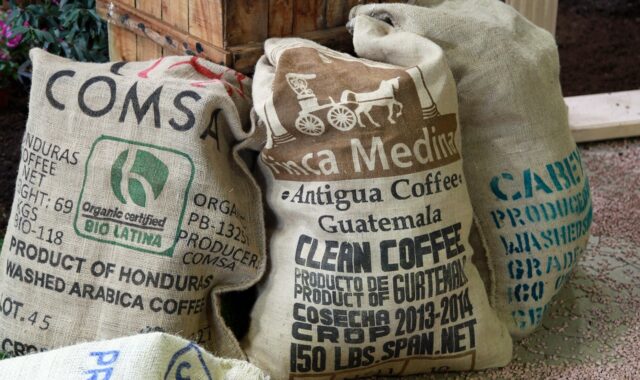
| Coffee, tea and spices | Agricultural exports remain important for foreign exchange and rural supply chains. | Quality, moisture, grading, seasonality and rejection clauses should be tied to independent inspection. |
| Manufactured and processed goods | Regional markets absorb goods such as cement, textiles, chemicals, edible oil and pharmaceuticals. | Confirm product registration, standards certificates and local import documentation before shipment. |
The payment implication is straightforward. Fast export growth can improve liquidity for some suppliers, but commodity concentration also increases exposure to price swings, regulatory scrutiny and documentation disputes. For new counterparties, open-account terms should normally be introduced only after a trading history, a clean document record and reliable payment behavior have been established.
What East Africa imports
East African imports reflect demand for energy, infrastructure equipment, consumer goods and industrial inputs. The EAC has described petroleum products as the largest import category, alongside machinery, transport equipment and industrial supplies. In the first quarter of 2026, the EAC bulletin listed mineral fuels and related products at about USD 4.1 billion, or 18.4 percent of imports. Machinery was about USD 2.2 billion, vehicles about USD 2.16 billion, and electrical machinery about USD 1.91 billion.
Exporters selling into the region need to treat these categories differently. Petroleum and fuel-related transactions can be sensitive to price changes, storage costs and government policy. Machinery and capital equipment often involve longer delivery schedules, installation obligations, spare-parts planning and staged payments. Vehicle and electrical equipment shipments may require inspection, conformity assessment, warranty terms and local tax classification review.
Import demand also exposes buyers to foreign exchange risk. Many large contracts are priced in U.S. dollars, euros or other hard currencies, while end-market revenues may be in local currencies. If a buyer’s local currency weakens after signing but before settlement, an invoice that looked affordable can become difficult to pay. Suppliers should not rely only on a purchase order. Before releasing goods, they should confirm the buyer’s funding source, banking route and ability to obtain foreign currency.
Trade partners and route dynamics
The EAC’s trade relationships are increasingly spread across African and global markets. In April–June 2026, exports to African countries reached USD 7.2 billion and accounted for 27.5 percent of total EAC exports. Exports to SADC markets rose to USD 5.1 billion, while exports to COMESA markets reached USD 3.1 billion. Intra-EAC exports also rose to USD 3.2 billion, although their share of total exports declined from 12.8 percent to 12.1 percent because exports outside the bloc grew faster.
China remained the EAC’s largest individual export destination and import source in the same quarter. EAC exports to China rose from USD 5.7 billion in the second quarter of 2025 to USD 10.7 billion in the second quarter of 2026, largely driven by minerals and raw materials. Imports from China increased from USD 4.7 billion to USD 7.1 billion. The United Arab Emirates and South Africa were also major export destinations, while India, the United Arab Emirates, Saudi Arabia, the United States and Japan were among the leading import sources.
These partner patterns affect payment risk in practical ways. A trader shipping machinery from Asia to an inland EAC buyer must account for ocean freight, port clearance, inland transport and border-document timing. A buyer purchasing minerals for shipment to Asia faces quality verification, origin controls and commodity-price exposure. A regional distributor buying from a neighboring EAC country may benefit from a shorter route, but still needs clear terms on the delivery point, customs responsibility, tax treatment and document release. See also: Customs and Compliance.
Payment risks to check before shipping
East Africa’s trade growth creates opportunities, but it also raises the cost of weak documentation and loose credit terms. Before releasing goods or accepting deferred payment, traders should review the following areas.
- Counterparty identity and authority: Verify registration details, trading history, tax or importer identification, beneficial ownership where available, and whether the person signing has authority to bind the company.
- Bank account integrity: Check that the beneficiary name, bank location and invoice details match the contract. Treat last-minute bank detail changes as a fraud warning until independently confirmed.
- Foreign exchange availability: Confirm the currency of payment, exchange-rate clause, payment deadline and any central bank or commercial bank requirements that could delay settlement.
- Documents required for customs and payment: Align the commercial invoice, packing list, bill of lading or airway bill, certificate of origin, insurance certificate, inspection certificate and any standards documents with the payment instrument.
- Commodity quality and pricing: For agricultural goods and minerals, use agreed grading, assay, sampling or inspection procedures. Payment disputes often arise when quality terms are vague.
- Logistics and delay costs: Clarify responsibility for demurrage, storage, inland transport, border delays and insurance. Incoterms should be used carefully and matched to the actual route.
- Compliance exposure: Minerals, precious metals, dual-use goods and high-value electronics require stronger screening for sanctions, anti-money-laundering concerns and origin documentation.
For broader coverage of settlement risk, documentary controls and trade finance structures, see the site’s Trade Risk and Payment section.
Matching payment terms to transaction type
No single payment method fits all East African trade. The right structure depends on the buyer’s history, the commodity, the destination, the banking relationship and the seller’s risk tolerance.
| Transaction type | Commonly safer payment structure | Why it helps |
|---|---|---|
| First shipment to a new buyer | Advance payment, confirmed irrevocable letter of credit, or deposit plus balance against documents | Reduces exposure before trust, credit record and document performance are proven. |
| Repeat buyer with clean history | Documentary collection, partial open account, or insured credit terms | Supports relationship growth while keeping document and credit controls in place. |
| Agricultural exports | Deposit plus inspection-linked balance payment | Connects payment to quality evidence and reduces disputes over grade or condition. |
| Machinery and capital equipment | Milestone payments, standby letter of credit, bank guarantee or LC with installation conditions | Matches payment to production, shipment, delivery and commissioning stages. |
| Minerals and precious metals | Bank-mediated payment, escrow, LC or payment after verified assay under agreed rules | Addresses high value, quality verification and compliance sensitivity. |
Letters of credit can reduce non-payment risk, but they are not automatic protection. They must be drafted accurately, issued or confirmed by acceptable banks, and matched to documents the seller can actually provide. Documentary collections are cheaper but provide less security because the bank handles documents without guaranteeing payment. Open-account terms can support sales growth, but for new or financially opaque buyers they shift most of the risk to the seller.
Practical checklist for traders
- Define whether the deal is domestic, intra-EAC, wider African or intercontinental, because the route changes the documentation and payment timeline.
- Identify the exact HS code and confirm import restrictions, duties, standards and inspection requirements before signing.
- Set the payment currency, exchange-rate reference and payment deadline in the contract.
- Use independent inspection for goods where grade, moisture, assay, weight or origin can affect value.
- Make document release conditional on payment or bank undertaking where the buyer is new or the shipment is high value.
- Build in time for port clearance, inland transport and border procedures, especially for landlocked destinations.
- Keep a written record of all contract amendments, bank detail confirmations and shipment milestones.
The main conclusion is that East African trade is moving in a positive direction, but not all growth carries the same payment risk. Export strength is closely linked to minerals and selected commodities, while import demand depends heavily on fuel, equipment and industrial goods. Traders that match payment terms to commodity risk, documentation quality and counterparty reliability will be better positioned than those that treat the region as a single, uniform market.
Frequently asked questions
What are East Africa’s main exports?
Within the EAC data, the largest recent export drivers are copper, precious metals and other mineral commodities. Coffee, tea and spices remain important agricultural exports, while regional markets also absorb manufactured and processed goods such as cement, textiles, chemicals and pharmaceuticals.
What are the major imports into East Africa?
The main import categories include petroleum products, machinery, vehicles, electrical equipment, transport equipment and industrial supplies. These imports support energy demand, infrastructure, consumer markets and industrial production.
Is East African trade in surplus or deficit?
The answer depends on the period. The EAC recorded a narrowed annual trade deficit of USD 2.5 billion in 2025. In April–June 2026, however, the region reported a small quarterly surplus of USD 0.3 billion as exports slightly exceeded imports.
Which payment method is safest for a new East African counterparty?
For a new counterparty, traders often prefer advance payment, a confirmed irrevocable letter of credit, or a deposit with the balance payable against compliant documents. The best choice depends on bank availability, deal size, buyer credit quality and the documents required for shipment.
Why does intra-EAC trade matter for payment risk?
Intra-EAC trade can shorten routes and support regional value chains, but it does not remove commercial risk. Traders still need to check buyer identity, tax treatment, customs documents, border procedures, currency exposure and whether the agreed delivery term reflects the actual movement of goods.