Exports and imports of goods and services and what customs teams need to track
a[data-rs-seo-link]{text-decoration:underline!important;color:#1a56db!important;cursor:pointer!important;}a[data-rs-seo-link]{text-decoration:underline!important;color:#1a56db!important;cursor:pointer!important;}
What the term covers in trade and compliance
Exports and imports of goods and services cover more than cargo crossing a border. Goods are physical merchandise and usually require customs declarations, tariff classification, valuation, origin determination, and import or export controls. Services include transport, travel, professional work, software support, finance, engineering, and digital delivery. They may not create a customs entry, but they can still affect tax, sanctions, licensing, contracts, and balance-of-payments reporting.
The distinction matters because global trade now operates as a combined goods-and-services system, not as a pure merchandise flow. The WTO reported that world trade in goods and commercial services, measured on a balance-of-payments basis, rose 8% in 2025 to US$34.89 trillion, and that services reached 27.5% of global trade, the highest share since 2005. (wto.org)
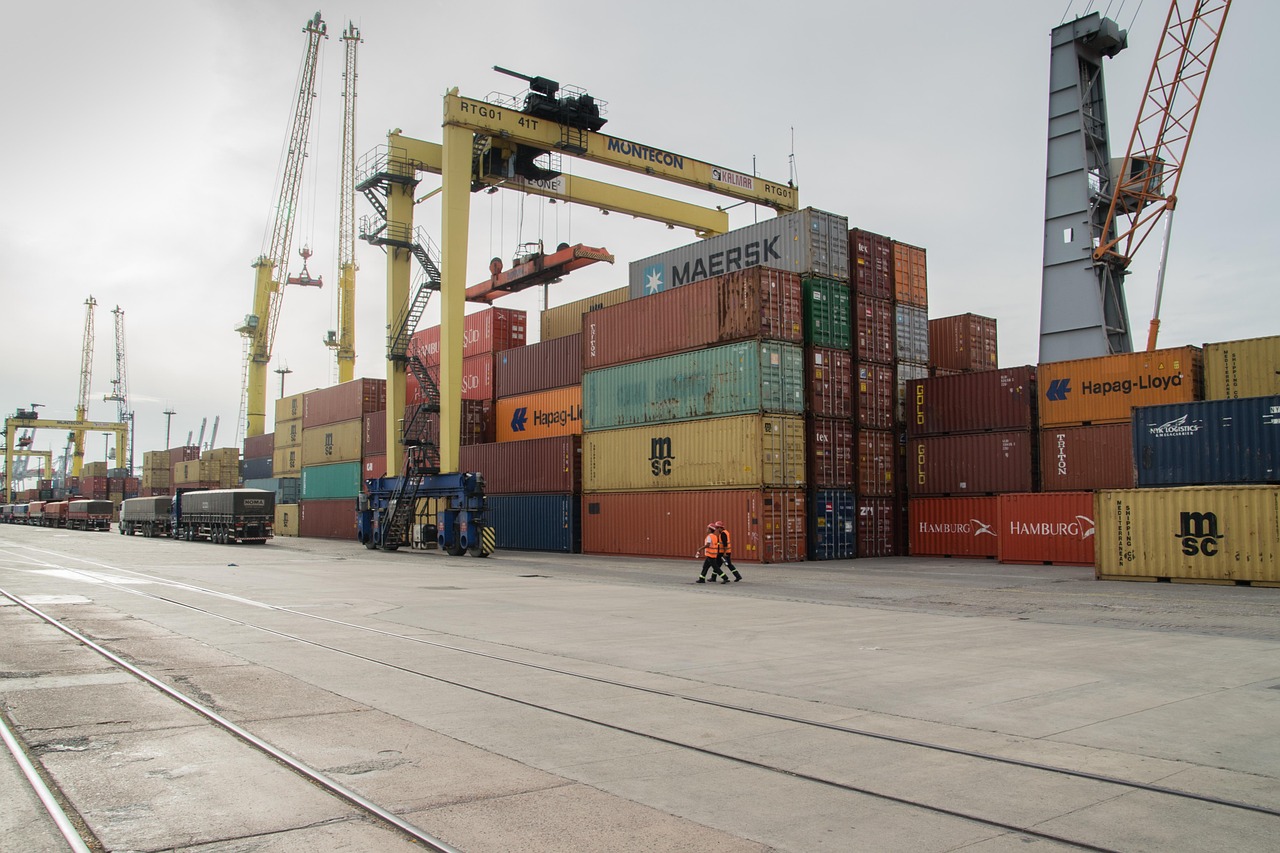
For customs teams, the point is practical: goods and services need different treatment, but they should not be managed in separate silos. One cross-border contract may include hardware, embedded software, installation, freight, maintenance, training, data hosting, and royalties. Each component can change the import value, export control assessment, tax treatment, or clearance documents. More guidance on customs-related topics is available in the customs and compliance section.
Why customs compliance starts with separating goods from services
Customs administrations mainly control goods when they enter, leave, or transit a customs territory. A shipment therefore needs a commodity description, Harmonized System code, country of origin, declared value, quantity, routing, consignee, and supporting documents. Services are different. They are often recorded under balance-of-payments rules when supplied between residents and non-residents. The IMF Balance of Payments and International Investment Position Manual separates exports and imports of goods from exports and imports of services, while also noting that some service categories can contain goods elements and some goods values can include service elements. (data.imf.org)
This overlap is where many compliance errors start. Engineering supplied by a buyer, royalties linked to imported goods, software loaded onto a physical device, repair charges, warranty replacements, and installation work can all raise classification or valuation questions. A company that books the entire contract as a service may understate the import value of dutiable goods. A company that treats all value as merchandise may overpay duties or misstate services revenue.
The first step is to map the transaction before shipment. Identify what is tangible, what is intangible, what crosses the border physically, what is delivered digitally, and which payments are conditions of sale. That review should happen before the commercial invoice is issued, because customs declarations, tax invoices, export screening records, and payment records need to describe the same transaction consistently.
The goods side depends on classification, value, origin, and controls
For merchandise trade, customs compliance usually begins with classification. The World Customs Organization describes the Harmonized System as the worldwide nomenclature used for uniform classification of internationally traded goods; the HS 2022 edition is the current edition referenced by the WCO. (wcoomd.org) National tariff schedules then expand HS headings into country-specific duty codes, statistical codes, restrictions, and special measures.
Classification is not only a duty-rate exercise. It can determine whether goods are subject to anti-dumping duties, safeguard measures, quota rules, export licensing, product safety checks, agricultural controls, or strategic trade controls. The WTO Trade Facilitation Agreement also recognizes HS code, goods description, origin, value, trader compliance record, and transport mode as possible selectivity factors in customs risk management. (wto.org)
Valuation is the second pillar. The WCO explains that the WTO Agreement on Customs Valuation primarily bases customs value on the transaction value: the price actually paid or payable for goods when sold for export to the country of importation, with certain adjustments. (wcoomd.org) In practice, teams need to test whether assists, royalties, license fees, commissions, packing, freight, insurance, tooling, design work, or related-party pricing affect the declared value under the destination country’s rules.
Origin is the third pillar. Non-preferential origin may affect trade remedies, marking, sanctions exposure, and procurement restrictions. Preferential origin may reduce duties under a free trade agreement, but only when the product meets the relevant rule of origin and the importer holds the required evidence. Origin should not be assumed from the seller’s location, invoice currency, or shipping point.
| Data point | Why it matters | Common control question |
|---|---|---|
| HS or tariff code | Sets duty rate, statistical reporting, and many product controls | Is the code supported by product specifications and classification reasoning? |
| Customs value | Forms the base for many ad valorem duties and taxes | Are royalties, assists, freight, insurance, or related-party adjustments required? |
| Country of origin | Determines origin marking, trade remedies, and preference eligibility | Is origin based on the legal rule, not just the supplier address? |
| Parties and routing | Supports sanctions screening and supply-chain risk review | Have seller, buyer, consignee, end user, carrier, and countries been screened? |
| Licenses and certificates | May be required before export or import clearance | Are permits in place before goods move? |
Service imports and exports still need compliance controls
Services trade is less visible at the border, but it is not outside regulation. The WTO’s General Agreement on Trade in Services distinguishes four modes of supply: cross-border supply, consumption abroad, commercial presence, and presence of natural persons. The WTO also notes that balance-of-payments statistics do not fully capture commercial presence in another country, which is one reason service trade can be harder to measure than goods trade. (wto.org)
A professional services export may require sanctions screening of the customer and end use. A remote software implementation may involve encryption controls, cybersecurity obligations, data-transfer rules, or restricted-party screening. A repair technician traveling to another country may trigger visa, immigration, payroll, tax, and professional licensing requirements. A cloud or data service sold across borders may be treated differently from a boxed software shipment, even when the commercial purpose is similar.
Data quality is another issue. The OECD and WTO explain that services trade flows are harder to observe than physical goods, especially when delivered digitally, and that only a limited number of economies publish some bilateral services statistics. Their BaTiS dataset was created to provide a more coherent matrix of services trade by partner and category. (oecd.org)
Compliance teams should avoid the assumption that services sit outside trade controls. Services may not require a customs broker, but they still need contract review, tax review, sanctions screening, export control review, and evidence of where the supplier, customer, personnel, data, and benefit of the service are located.
Mixed transactions create the highest risk
The most difficult cases are bundled transactions. Modern supply chains often combine physical products with maintenance, digital updates, financing, engineering, consulting, repairs, and post-sale technical support. These packages may be efficient commercially, but they can blur the line between the value of goods and the value of services.
Consider imported machinery sold with installation and training. The machine clearly needs customs classification and valuation. Installation may or may not be included in customs value depending on the jurisdiction, contract terms, and whether the work occurs before or after importation. Training may be a separate service for accounting and tax purposes. Spare parts may require separate classifications. Software may be embedded in the equipment, delivered separately, or licensed through a cloud platform. See also: Freight and Logistics.
Repairs create another common problem. Goods exported temporarily for repair and then reimported may qualify for special treatment in some jurisdictions, but the treatment usually depends on correct outward processing documentation, proof of identity, repair invoices, and timing. Without the right records, the importer may be charged duty on the full value of returned goods rather than only on repair value or added value where relief is available.
Digital products also require careful analysis. A downloadable design file, source code transfer, technical assistance session, or remote access to controlled technology may not look like a shipment, but it can still be an export for control purposes. Companies that focus only on parcel movements may miss intangible exports entirely.
A practical control framework for companies
A strong framework does not require every employee to become a customs specialist. It requires clear ownership, reliable data, and escalation rules. The following sequence works for many importers, exporters, and service providers:
- Define the transaction type. Separate physical goods, digital deliverables, on-site services, recurring subscriptions, royalties, repairs, and support obligations.
- Classify goods before sale or purchase. Use technical specifications, product composition, function, and intended use to support tariff classification.
- Review value drivers. Identify payments or free-of-charge items that may affect customs value, including design work, tooling, royalties, and commissions.
- Determine origin evidence. Keep supplier declarations, bills of materials, manufacturing records, or certificates required for origin claims.
- Screen parties and end use. Check customers, suppliers, intermediaries, destinations, and intended uses before shipping goods or providing controlled services.
- Match documents across systems. Commercial invoices, customs entries, purchase orders, service contracts, tax invoices, and accounting records should not contradict one another.
- Create escalation triggers. Route unusual terms, related-party pricing, new destinations, controlled technology, repairs, and bundled contracts to trade compliance before execution.
Internal ownership is critical because no single function usually holds the full picture. Procurement may know the supplier. Engineering may know the product. Sales may know the customer and contract terms. Logistics may know the route. Finance may know the payment structure. Customs compliance needs to bring those facts together before the declaration is made or the service is supplied.
What current trade trends mean for compliance planning
Recent trade data reinforces the need for better transaction-level controls. The WTO reported that world merchandise trade volume grew 4.6% in 2025, above its earlier forecast, with demand for AI-related goods offsetting the effects of higher tariffs and trade policy uncertainty. (wto.org) In its later outlook summary, the WTO also noted that the US dollar value of world merchandise trade rose much faster than volume in the first half of 2026, reflecting higher prices for fuels and electronic components for data centres. (wto.org)
For companies, this makes customs value, technology controls, and product classification more sensitive. AI-related hardware, servers, semiconductors, data-centre components, energy inputs, and specialized electronics may carry higher values, more complex classifications, and closer government attention. Related services such as cloud hosting, engineering, maintenance, cybersecurity, and data processing may also sit inside the same commercial arrangement.
The compliance takeaway is not that every transaction is high risk. It is that trade compliance should be involved earlier when contracts combine goods and services, when prices move quickly, or when technology has strategic importance. Early review is less costly than post-entry corrections, delayed shipments, penalty disclosures, or disputes over who was responsible for missing data.
Frequently asked questions
Are exports and imports of goods and services measured the same way?
No. Goods are usually tracked through customs and merchandise trade systems when they physically cross borders. Services are often tracked through balance-of-payments concepts, surveys, business records, and other statistical methods. Mixed transactions may require both approaches.
Do services require customs declarations?
Pure services normally do not require a customs entry because no physical merchandise crosses the border. However, services can still create tax, sanctions, immigration, export control, data-transfer, or licensing obligations. If a service is bundled with goods, part of its value may also become relevant to customs valuation.
What is the biggest compliance mistake in mixed goods-and-services contracts?
The biggest mistake is treating the contract as one undivided amount without analyzing its components. Customs, tax, export controls, accounting, and contract teams may each need a different allocation or evidence package.
Why does customs valuation matter for imports?
Customs valuation matters because many duties and import taxes are calculated as a percentage of the declared customs value. If the declared value excludes required additions or includes amounts that should be separated, the importer may face underpayment, overpayment, delays, or post-clearance adjustments.
How should a company begin improving controls?
Start with a transaction map. List the goods, services, payments, countries, parties, delivery methods, and post-sale obligations. Then assign owners for classification, valuation, origin, screening, tax review, and recordkeeping before shipment or service delivery begins.