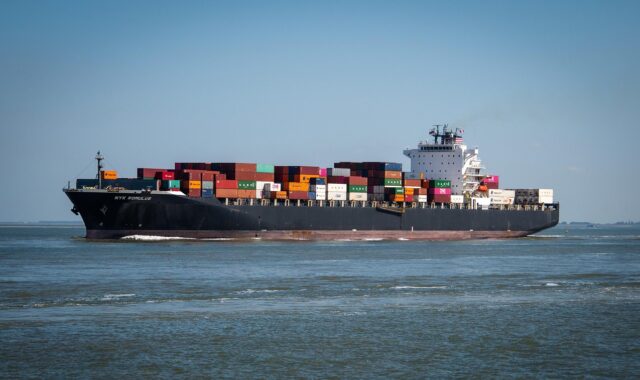
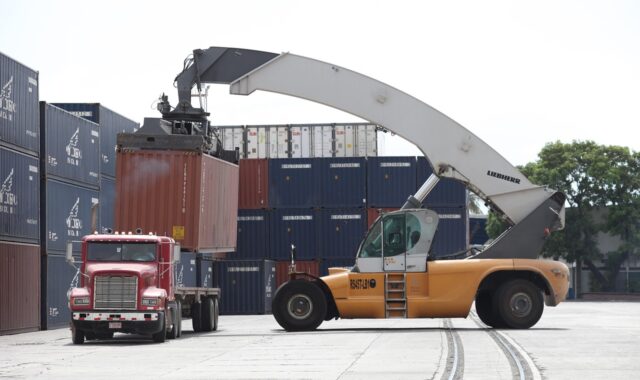
The importance of export trade for growth, resilience and payment strategy
a[data-rs-seo-link]{text-decoration:underline!important;color:#1a56db!important;cursor:pointer!important;}a[data-rs-seo-link]{text-decoration:underline!important;color:#1a56db!important;cursor:pointer!important;}
Why export trade matters now
The importance of export trade goes beyond selling more goods abroad. For companies, exports can widen the customer base, reduce dependence on one domestic market, improve capacity use and create useful learning from international buyers. For economies, export trade connects producers with larger markets, supports foreign exchange earnings and helps firms take part in cross-border value chains.
Export growth also brings practical risk. International sales can expose a business to buyer default, currency movement, sanctions screening, documentary errors, logistics disruption and working-capital pressure. For that reason, export strategy and payment strategy should be planned together rather than treated as separate workstreams.
Recent trade data shows why this matters. UN Trade and Development estimated that global trade in goods and services reached about US$33 trillion in 2024. The World Trade Organization’s October 2026 outlook expected merchandise trade volume to grow by 3.9% in 2026 and 4.1% in 2027, while also warning that regional performance and sector drivers remain uneven. Export opportunity is real, but it is not evenly distributed or risk-free.
Export trade expands demand beyond the home market
The most direct value of export trade is market access. A company that sells only in one country is exposed to local business cycles, consumer trends, regulation and sector slowdowns. Exporting allows a producer, wholesaler or service provider to look for demand where purchasing power, seasonality, infrastructure spending or industrial policy may be more favorable.
This is especially important for sectors with high fixed costs. Manufacturers, food processors, machinery suppliers and specialist component makers often need steady volume to protect margins. Export orders can help spread fixed costs across a larger sales base, making each unit more competitive. A domestic downturn may still hurt, but it does not automatically remove every revenue channel.
Export trade also forces firms to work to international expectations. Buyers may require clearer specifications, stronger packaging, product certification, inspection documents, traceability or after-sales support. These requirements can be demanding, but they often improve internal discipline. Firms that learn to satisfy foreign documentation, delivery and quality standards may become more competitive at home as well.
For smaller firms, exports can support a more specialized business model. A niche supplier may find that its domestic market is too small, while several overseas markets together are large enough to support a profitable product line. The benefit is not only additional revenue; it is the ability to build a business around a narrower and more defensible capability.
Exports support foreign exchange, jobs and business investment
At the economy level, exports bring in foreign currency and help finance imports of energy, machinery, technology and intermediate goods. Countries that export competitively can pay for essential imports without relying entirely on borrowing or volatile capital inflows. This is one reason export performance is closely watched by policymakers, banks and investors.
Export industries can also support employment beyond the exporting company itself. A single exporter may depend on local logistics providers, packaging suppliers, testing laboratories, maintenance contractors, customs brokers, insurers and banks. When export orders grow, the benefits can flow through these supporting services. The effect varies by country and sector, but export trade is rarely isolated from the wider business ecosystem.
Investment is another channel. Firms with access to international customers may have stronger reasons to upgrade equipment, digitize order management, improve quality control or hire staff with compliance and language skills. Export markets can therefore influence how companies allocate capital. The decision to export is not only a sales decision; it often becomes part of an operational development plan.
Export-led growth, however, is not automatic. It depends on competitiveness, infrastructure, trade policy, finance availability and the reliability of counterparties. A business that wins an export order but cannot finance production, arrange compliant documents or collect payment on time may face cash stress instead of growth.
Export diversification makes companies more resilient
One of the strongest practical arguments for exporting is diversification. A company selling into several markets can compare demand, payment behavior, regulatory change and logistics reliability across customers and regions. This does not remove risk, but it reduces the danger of depending on a single buyer group or one domestic cycle.
Diversification becomes more important when trade patterns shift. WTO reporting in 2026 showed that AI-enabling goods became a major driver of merchandise trade growth, while fuel, fertilizer and transport disruption created pressure in other areas. The contrast points to a wider lesson: export opportunity can rise quickly in one sector while another faces disruption. Companies that monitor international demand signals may identify new routes to growth earlier than firms focused only on local demand.
Export diversification can be geographic, sectoral or customer based. Geographic diversification means selling into more than one country or region. Sectoral diversification means serving buyers in different industries, such as agriculture, construction and renewable energy. Customer diversification means avoiding overreliance on one distributor or one large overseas account.
The strongest approach is usually selective diversification, not uncontrolled expansion. Every new market brings its own rules, tax treatment, customs procedures, product requirements and payment habits. A company should not enter a new export market simply because demand exists. It should confirm whether the buyer is credible, the payment method is appropriate, the logistics route is practical and the contract terms are enforceable.
Payment terms determine whether export sales become cash
Export trade creates value only when sales convert into collected cash. This is where the link between export growth and payment risk becomes critical. International transactions involve distance, different legal systems, shipping time, currency exposure and, in some cases, limited information about the buyer. The payment method should match the relationship, country risk, order value and bargaining position.
Common methods include cash in advance, letters of credit, documentary collections, open account and consignment. Each method shifts risk differently between exporter and importer. Cash in advance is more protective for the seller but less attractive to buyers. Open account is commercially attractive for buyers but exposes the exporter to non-payment after shipment. Letters of credit and documentary collections sit between these extremes, using banks and documents to manage payment and delivery risk.
| Payment method | Typical exporter benefit | Main limitation | Best fit |
|---|---|---|---|
| Cash in advance | Reduces non-payment risk before shipment | May reduce competitiveness if buyers demand credit | New buyers, customized goods or high-risk markets |
| Letter of credit | Bank undertaking can improve payment security if documents comply | Cost, documentation burden and discrepancy risk | Higher-value or less familiar transactions |
| Documentary collection | Banks handle documents and collection instructions | Banks generally do not guarantee payment | Established buyers in stable markets |
| Open account | Commercially attractive and simple for trusted buyers | Exporter ships before payment is due | Long-term customers with strong credit checks |
| Consignment | Can help distributors sell into a market | Payment depends on resale of goods | Highly trusted partners and controlled channels |
The International Trade Administration’s trade finance guidance describes payment choice as a balance between competitiveness and payment protection. ICC rules are also important in this area. UCP 600, which came into effect on July 1, 2007, remains the widely used ICC framework for documentary credit practice. Incoterms 2020, also published by the ICC, helps parties define delivery responsibilities, although Incoterms do not replace payment terms or determine title transfer by themselves.
For companies reviewing trade risk and payment decisions, the key question is not which payment method is best in general. The better question is which method fits this buyer, this market, this product, this shipping route and this margin. See also: Customs and Compliance.
Export growth increases working-capital pressure
Exporting often lengthens the cash cycle. A company may need to buy materials, manufacture goods, pay for packaging, book freight, arrange inspection and prepare documents before receiving payment. If the buyer pays 30, 60 or 90 days after shipment, the exporter finances the transaction for a significant period.
This is why trade finance matters. Banks, export credit agencies, insurers and specialist finance providers can help bridge the gap between production and payment. Instruments may include pre-shipment finance, receivables finance, letters of credit, credit insurance or guarantees. The right structure depends on the exporter’s balance sheet, buyer quality, country risk and document flow.
The Asian Development Bank’s 2025 Global Trade Finance Gap Survey estimated the global trade finance gap at US$2.5 trillion, unchanged from 2023 and equal to about 10% of global trade. The same survey noted that many banks expected demand for trade finance to rise as companies diversify markets and reorganize supply chains. This is an important warning for exporters: winning foreign demand is only part of the job. Financing the order and collecting payment are equally important.
Working-capital stress can be hidden inside fast growth. A company may celebrate a large overseas order while underestimating deposit requirements, inventory holding time, inspection delays or document correction costs. If several export orders overlap, cash pressure can intensify quickly. Export planning should therefore include a cash-flow calendar showing production dates, shipment dates, document submission dates, expected payment dates and contingency needs.
Trade risk must be built into export strategy
Export trade can improve resilience, but only when risk is identified early. The main risks include commercial risk, country risk, currency risk, logistics risk, compliance risk and documentary risk. A strong export strategy does not try to remove all risk. Instead, it decides which risks are acceptable, which can be transferred and which should stop the transaction.
- Commercial risk: the buyer may delay payment, reject goods, become insolvent or dispute quality.
- Country risk: political events, foreign exchange controls, sanctions, import restrictions or civil disruption may affect performance.
- Currency risk: exchange-rate movement can reduce margin between quotation and payment.
- Logistics risk: port congestion, route disruption, damage, theft or delay can affect delivery and cash timing.
- Compliance risk: sanctions, export controls, customs classification, product standards and documentation rules may change transaction viability.
- Documentary risk: errors in invoices, transport documents, certificates or letter of credit presentations can delay or prevent payment.
Practical controls include buyer due diligence, credit limits, written contracts, sanctions screening, clear Incoterms, appropriate insurance, document checklists and escalation procedures for late payment. For higher-value transactions, exporters should involve their bank, freight forwarder, insurer and legal adviser before agreeing terms, not after goods are already in transit.
How to evaluate an export opportunity before accepting the order
A disciplined export review helps companies avoid turning revenue into unnecessary risk. The following checklist is useful before confirming a new buyer or market:
- Confirm buyer identity and credit quality. Check registration details, trading history, references and payment behavior where reliable information is available.
- Assess country and regulatory risk. Review sanctions, import rules, foreign exchange restrictions, product standards and customs requirements.
- Match payment terms to risk. New or high-risk buyers may require advance payment, confirmed letters of credit or credit insurance rather than open account.
- Check margin after all export costs. Include freight, insurance, bank fees, inspection, certification, packaging, documentation and possible delay costs.
- Define delivery responsibilities clearly. Use the appropriate Incoterms rule and make sure both sides understand the named place, risk transfer and cost allocation.
- Prepare documents early. Align the commercial invoice, packing list, transport document, certificate of origin and any letter of credit requirements before shipment.
- Plan cash flow. Map when cash leaves the business and when payment is realistically expected.
This process may slow the first transaction, but it reduces the chance of disputes later. In export trade, speed is useful only when the commercial, payment and compliance foundations are sound.
Frequently asked questions
Why is export trade important for a business?
Export trade is important because it gives a business access to customers beyond its domestic market. It can increase sales potential, improve capacity use, diversify revenue and expose the company to higher standards in quality, documentation and service. The benefit depends on choosing the right markets and controlling payment and logistics risk.
What is the biggest risk in export trade?
There is no single biggest risk for every transaction, but non-payment is often the most damaging because it directly affects cash flow. Other major risks include currency movement, regulatory non-compliance, shipping disruption and document discrepancies. The correct payment method and due diligence process can reduce these risks.
Which payment method is safest for exporters?
Cash in advance is usually the most protective for exporters because payment is received before shipment. However, it may be unattractive to buyers. Letters of credit can provide strong protection when properly structured, but they require strict document compliance. The safest practical method depends on buyer trust, transaction value, country risk and competitive pressure.
Does exporting always improve profitability?
No. Exporting can improve profitability when additional sales cover the extra costs and risks of international trade. Profit can fall if freight, finance, documentation, compliance, returns, currency losses or late payment are underestimated. Export margin should be calculated after all trade-related costs, not only against the factory or purchase price.
How should a company start building an export strategy?
A company should start by selecting a small number of realistic target markets, checking buyer demand, reviewing compliance requirements and choosing payment terms that match the risk. It should also prepare document templates, logistics partners and a cash-flow plan before accepting larger orders.
The practical takeaway
The importance of export trade lies in its ability to connect businesses with wider demand, support investment and strengthen resilience. Yet exports are not just a growth channel; they are also a risk-management challenge. The companies that benefit most are usually those that treat market selection, pricing, payment terms, documentation and finance as one connected system.
Exporting can open valuable opportunities, but every opportunity should answer three questions before shipment: who will pay, when will cash arrive and what happens if the transaction does not go as planned? Clear answers to those questions turn export trade from an ambitious sales target into a controlled commercial strategy.