Factors affecting exports and imports in global trade compliance
a[data-rs-seo-link]{text-decoration:underline!important;color:#1a56db!important;cursor:pointer!important;}a[data-rs-seo-link]{text-decoration:underline!important;color:#1a56db!important;cursor:pointer!important;}
Why exports and imports rise or fall
The main factors affecting exports and imports are market demand, relative prices, exchange rates, tariffs, non-tariff measures, customs procedures, logistics capacity, financing conditions, and political risk. These factors rarely move in isolation. A tariff change may alter landed cost, but the trade decision can also depend on shipping time, HS classification, buyer demand, currency movements, and whether the importer can prove origin or obtain a required license. For customs and compliance teams, the question is not only whether trade is growing or shrinking. It is whether each shipment can move with correct classification, valuation, origin evidence, documentation, and risk controls.
Recent public trade sources show why single-factor explanations are often weak. The WTO’s 2026 trade outlook linked stronger merchandise trade to AI-enabling goods and investment demand, while UNCTAD’s January 2026 Global Trade Update warned that tariff uncertainty and industrial policies could continue to reshape trade flows. The World Bank’s logistics work also points to infrastructure, border processes, and shipment predictability as important constraints. Taken together, these sources suggest that companies should assess export and import changes through three connected lenses: commercial demand, policy cost, and operational feasibility.
| Factor | How it affects trade | Compliance signal to monitor |
|---|---|---|
| Demand and income | Higher consumer or industrial demand increases imports and can support exports from supplying countries. | Order trends, sector demand, buyer concentration. |
| Exchange rates | A weaker domestic currency may support exports but can raise the cost of imported inputs. | Currency clauses, customs value, transfer pricing consistency. |
| Tariffs and trade remedies | Duties change landed cost and may shift sourcing decisions. | HTS updates, anti-dumping duties, safeguard measures. |
| Rules of origin | Origin rules decide whether goods qualify for preferential duty treatment. | Supplier declarations, bill of materials, production records. |
| Logistics capacity | Port congestion, route disruption, and inland delays can make trade uneconomic. | Transit times, demurrage exposure, routing alternatives. |
| Customs procedures | Documentation errors can delay release, trigger penalties, or remove preferential treatment. | Classification rulings, valuation support, license checks. |
Market demand, prices, and exchange rates
Exports usually rise when foreign buyers want more of a country’s goods or services at competitive prices. Imports rise when domestic buyers need goods that are unavailable, more expensive, or not supplied in sufficient volume at home. Demand may be driven by consumer income, industrial production, public infrastructure spending, seasonal buying cycles, and technology investment. For example, the WTO has reported that AI-related capital investment and demand for semiconductors, servers, and related equipment supported merchandise trade growth in the first half of 2026. That does not mean every sector benefits equally; it means product category and end-market demand matter.
Exchange rates add another layer. A weaker currency can make exports cheaper for overseas buyers, but it can also increase the local-currency cost of imported raw materials, machinery, fuel, or components. For manufacturers that rely on imported inputs, a currency shift may improve export pricing while squeezing margins. Importers face the opposite risk: a stronger foreign supplier currency can raise landed cost even when the duty rate has not changed.
Price competitiveness also depends on inflation, energy costs, wages, productivity, and supplier scale. A low tariff does not guarantee import growth if freight costs rise or buyers move to closer suppliers. Likewise, a strong export sector can lose momentum if production costs increase faster than competitors’ prices.
Trade policy, tariffs, and non-tariff measures
Trade policy is one of the most visible factors affecting exports and imports because it can change landed cost quickly. Tariffs, quotas, export controls, sanctions, licensing rules, product standards, and anti-dumping measures all influence whether a shipment remains commercially viable. A small duty increase may be manageable for high-margin products, while the same increase can stop trade in low-margin goods.
Trade agreements can reduce duties, but only when goods satisfy the applicable rules of origin. This is where compliance becomes operational. Preferential duty treatment often depends on supplier records, regional value content, tariff shift rules, direct transport conditions, and valid origin statements. If those records are incomplete, an importer may lose the preference and owe additional duty, interest, or penalties.
Non-tariff measures can be just as important as tariffs. Technical standards, labeling rules, sanitary and phytosanitary requirements, testing procedures, and conformity assessments may delay or block entry even when the duty rate is low. In food, chemicals, medical devices, electronics, and dual-use goods, regulatory readiness can decide whether an export opportunity is practical or only theoretical.
Policy uncertainty can change behavior before rules take effect. Importers may frontload shipments before expected tariff increases, pause orders while waiting for guidance, or diversify suppliers to reduce exposure to one customs jurisdiction. UNCTAD’s 2026 trade update described continuing uncertainty as governments use tariffs and other instruments to pursue industrial, supply-chain, and trade-balance objectives. Companies therefore need to monitor policy proposals as well as laws already in force.
Customs procedures and documentation quality
Customs performance directly affects trade because even a profitable order can fail if goods cannot clear the border on time. Classification, valuation, origin, admissibility, and documentation are the core controls. The Harmonized System maintained by the World Customs Organization provides the international basis for product classification, while national tariff schedules add country-specific duty rates, statistical codes, and special measures. A classification error can lead to the wrong duty rate, missed licensing obligations, or incorrect trade remedy exposure.
The WTO Trade Facilitation Agreement entered into force on 22 February 2017, and WTO estimates have indicated that full implementation could reduce trade costs by an average of 14.3%. The rationale is straightforward: predictable procedures, advance rulings, transparent fees, electronic processing, and faster release of goods reduce the friction that discourages cross-border trade.
Documentation quality is often the difference between smooth clearance and costly delay. Commercial invoices, packing lists, transport documents, certificates of origin, licenses, test reports, and product descriptions must tell a consistent story. Customs authorities may question a shipment when the invoice description is vague, the declared value is unsupported, the country of origin conflicts with supplier records, or the product appears to be subject to restrictions.
For ongoing guidance on border rules and shipment controls, the Customs and Compliance section can be used as a reference point for related trade topics.
Logistics, infrastructure, and route reliability
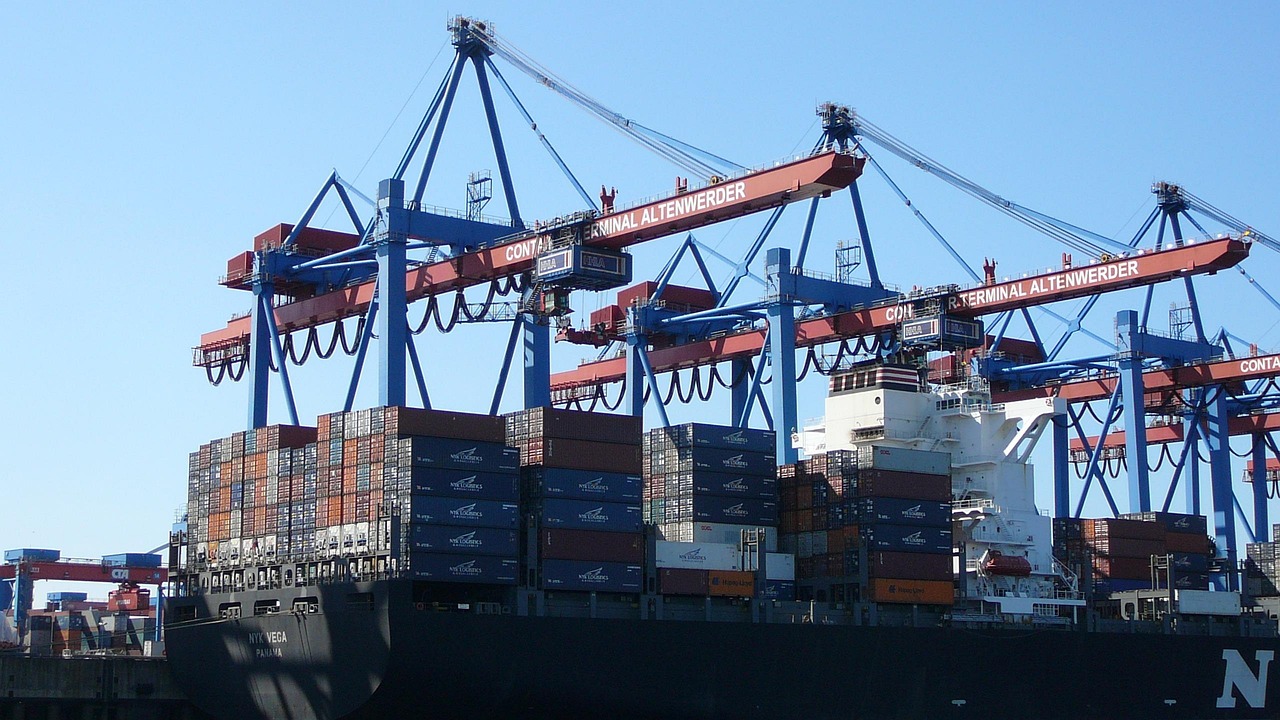
Exports and imports depend on physical movement as much as legal permission. Port capacity, vessel schedules, container availability, rail and road links, warehouse space, and border staffing affect delivery time and cost. When transport networks are reliable, companies can hold leaner inventory and trade across longer distances. When networks are unreliable, buyers often shift to nearer suppliers or demand higher safety stock.
The World Bank’s logistics indicators have repeatedly treated customs, infrastructure, international shipments, logistics service quality, tracking, and timeliness as core dimensions of trade performance. Its newer logistics work based on shipment-level operational data has also highlighted connectivity gaps and time penalties linked to transshipment and border procedures. For traders, route design is a compliance and cost issue, not only a freight issue. See also: Freight and Logistics.
Geopolitical disruption can also redirect trade. Conflict, sanctions, port closures, canal delays, fuel price shocks, and insurance restrictions may raise freight rates or make a route unavailable. A supplier may still be able to produce the goods, but the delivered price and lead time may no longer fit the buyer’s contract.
Finance, inventory, and business risk
Trade finance determines whether buyers and sellers can carry the time gap between production, shipment, customs clearance, and payment. Higher interest rates increase the cost of inventory and letters of credit. Limited credit insurance can make exporters more cautious about new buyers. Importers may reduce orders when duty deposits, freight prepayments, and longer lead times tie up too much working capital.
Inventory strategy also changes import behavior. When policy risk is high, importers may bring goods in early to avoid possible tariffs or shortages. That can temporarily increase imports, followed by a slowdown as inventories are used. Exporters may see the same pattern from overseas buyers: strong orders before a rule change, then weaker demand afterward. This is why monthly trade data can be misleading if frontloading or stockpiling is not considered.
For compliance teams, finance and inventory decisions should be reviewed alongside customs exposure. A decision to switch suppliers may change origin, duty rate, forced labor risk, export control status, labeling requirements, or documentation language. A cheaper sourcing option is not cheaper if it creates clearance delays or audit exposure.
A practical risk map for trade compliance teams
The most useful way to manage the factors affecting exports and imports is to translate them into review triggers. A compliance team does not control global demand or exchange rates, but it can reduce avoidable customs risk when commercial conditions change.
- When suppliers change: recheck HS classification, origin, admissibility, sanctions exposure, and product documentation.
- When duty rates change: update landed cost models, purchase orders, broker instructions, and origin preference claims.
- When routes change: review direct transport rules, insurance coverage, transshipment risk, and document timing.
- When product specifications change: reassess classification, labeling, testing, and licensing obligations.
- When currencies move sharply: confirm declared value support, pricing terms, assists, royalties, and transfer pricing alignment.
- When demand surges: check whether expedited shipments still include complete documentation and required approvals.
This risk map also helps separate facts from assumptions. A sales team may believe exports are rising because a product has become more competitive, while the actual driver may be temporary stockpiling before a tariff deadline. A purchasing team may blame weak imports on supplier capacity, while the constraint may be port reliability or missing conformity documents. The compliance function adds value by connecting commercial decisions to the border requirements that determine whether trade can actually happen.
Frequently asked questions
What is the biggest factor affecting exports and imports?
There is no single biggest factor across all products. For commodities, global prices and freight costs may dominate. For regulated goods, licensing and product standards may matter most. For consumer goods, demand, exchange rates, tariffs, and delivery reliability often interact.
How do tariffs affect imports?
Tariffs raise landed cost. Importers may absorb the cost, raise prices, renegotiate with suppliers, change sourcing, claim a trade agreement preference, or reduce orders. The commercial impact depends on margin, buyer sensitivity, and whether competitors face the same duty.
Why does HS classification matter for export and import planning?
HS classification determines duty rates, statistical reporting, eligibility for trade remedies, and sometimes licensing or admissibility requirements. Incorrect classification can distort landed cost calculations and create customs audit risk.
Can a weaker currency always increase exports?
No. A weaker currency can make exports cheaper for foreign buyers, but exporters that rely on imported inputs may face higher production costs. Capacity limits, logistics disruption, and foreign demand also affect the result.
How often should companies review trade compliance risks?
Companies should review risks whenever products, suppliers, routes, prices, origin claims, or regulations change. For high-volume or regulated goods, a scheduled review cycle plus event-based checks is safer than relying only on annual updates.