International trade imports and exports compliance checklist for 2026
a[data-rs-seo-link]{text-decoration:underline!important;color:#1a56db!important;cursor:pointer!important;}a[data-rs-seo-link]{text-decoration:underline!important;color:#1a56db!important;cursor:pointer!important;}
The compliance priority for 2026
International trade imports and exports are no longer checked only at the port gate. Many controls now start earlier, in product master data, supplier records, emissions information, security filings, forced labor reviews and export-control screening. For customs teams in 2026, the practical test is whether the commercial invoice, tariff classification, origin claim, customs value, licence status and logistics data are consistent before a shipment leaves the seller.
The World Trade Organization reported in its 8 October 2026 Global Trade Outlook and Statistics update that merchandise trade volumes were expected to grow 3.9% in 2026 and 4.1% in 2027, while also noting that gains remain uneven and policy-sensitive. In that environment, disciplined customs compliance is a commercial requirement, not just a paperwork exercise.
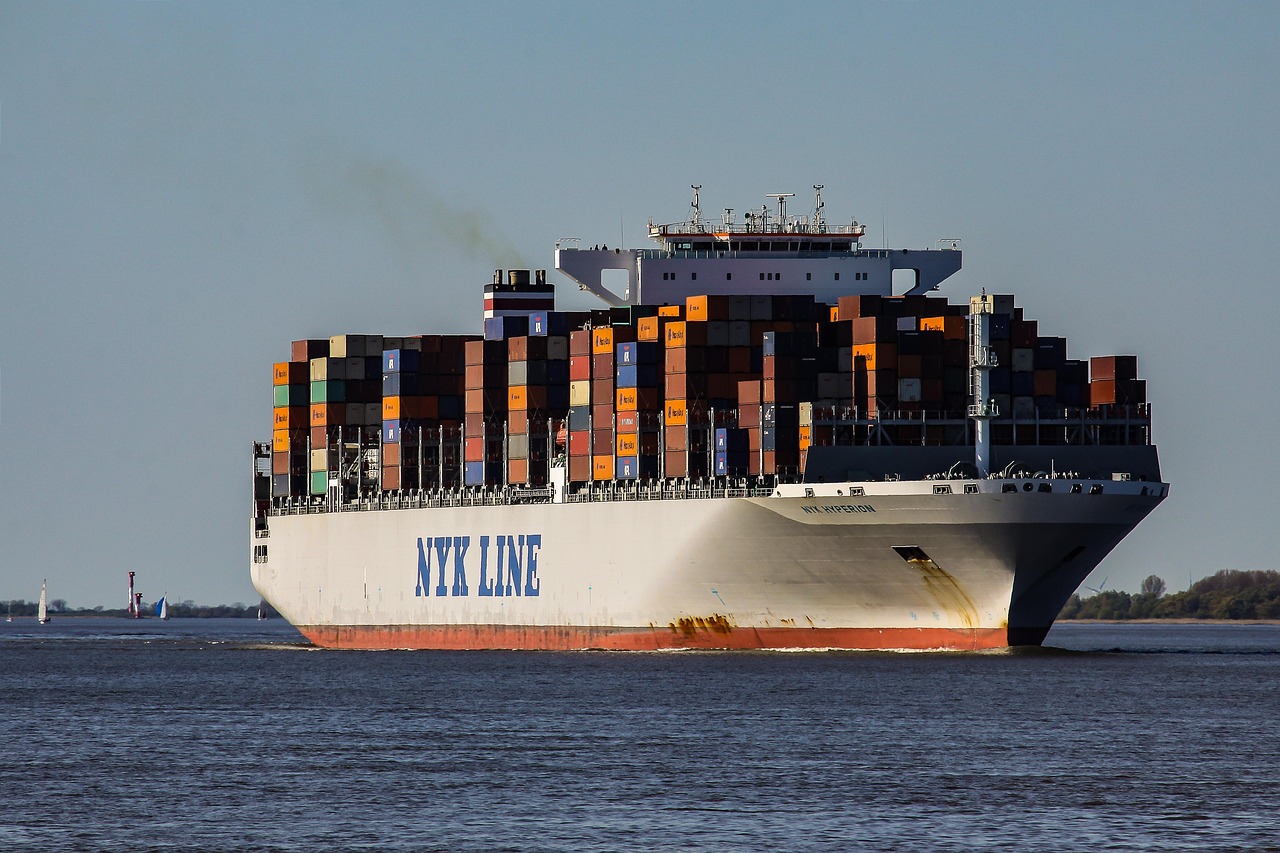
This checklist is written for importers, exporters, freight teams and trade managers that need a practical framework. It is not jurisdiction-specific legal advice, but it shows where many errors begin and how to build a defensible compliance file.
Start with product identity and classification
Every compliant shipment starts with a clear answer to a basic question: what exactly is being traded? A vague product description can lead to the wrong tariff code, the wrong duty rate, a missed licence requirement or an unsupported origin claim. Customs authorities generally expect descriptions that identify material, function, model, composition, end use and key technical characteristics where relevant.
HS codes are the base, not the whole answer
The World Customs Organization maintains the Harmonized System, the international foundation used by customs administrations and statistical agencies to classify traded goods. The HS structure gives companies a common starting point, but national tariff schedules add more digits, legal notes, duty rates and regulatory measures. In practice, a six-digit HS subheading is often not enough for an import entry, export declaration or duty analysis.
For 2026 planning, companies should also monitor the WCO’s published materials for the HS 2028 edition, including correlation information between the 2022 and 2028 versions. HS 2028 is not automatically the operative tariff schedule in every market, but early mapping helps companies avoid last-minute classification changes when national authorities implement updates.
Classification should be documented, not guessed
A defensible classification file should include the product specification, catalogue sheet, bill of materials where appropriate, composition data, intended use, relevant legal notes, comparable rulings if available, and the reasoning behind the selected code. If a broker proposes a code, the importer or exporter should still review it. Delegating filing work does not remove the company’s responsibility for the accuracy of the data it provides.
Build import controls around value, origin and market-entry rules
Classification is only one part of import compliance. Customs value, country of origin, trade agreement eligibility, prohibited goods rules, product safety controls and sector-specific requirements can all affect whether a shipment is admissible and how much it will cost when landed.
Under the WTO customs valuation framework administered technically by the WCO, the primary basis for customs value is generally the transaction value of the imported goods, adjusted where required by the rules of the importing country. Trade teams should not assume the invoice price is automatically sufficient. Assists, royalties, commissions, packing costs, proceeds of resale and the treatment of freight or insurance may matter depending on the jurisdiction and terms of sale.
Origin requires a separate analysis. Non-preferential origin may determine marking, trade remedies, quotas or sanctions exposure. Preferential origin determines whether a shipment can claim a lower duty rate under a trade agreement. A supplier statement is useful, but it is not a substitute for rules-of-origin testing, production records and retention of supporting documents.
For EU-facing trade, the Carbon Border Adjustment Mechanism is now a live import planning issue. The European Commission states that the CBAM definitive regime applies from 1 January 2026. It covers selected goods in cement, iron and steel, aluminium, fertilisers, electricity and hydrogen. EU importers, or indirect customs representatives in relevant cases, must consider authorised declarant requirements, annual declarations, embedded emissions data and certificates where thresholds and product scope apply. Exporters outside the EU may not file the EU declaration themselves, but they will often need to provide emissions and production data to their EU buyers.
Treat export controls as a separate workflow
A common compliance mistake is assuming that an import tariff code also answers export-control questions. It does not. For U.S.-origin or U.S.-controlled items, the Bureau of Industry and Security explains that exporters need to determine whether an item is subject to the Export Administration Regulations and whether it has an Export Control Classification Number. BIS also notes that an ECCN is distinct from an HTS code or Schedule B number.
The same principle applies outside the United States. Export controls usually focus on the item, technology, software, destination, end user and end use. A commercial product may look ordinary for tariff purposes but still raise licensing issues if it has advanced technical performance, encryption, aerospace, semiconductor, military, nuclear, chemical or surveillance applications.
A practical export-control workflow should answer five questions before shipment:
- What is the item, including software, technology and technical data?
- Who made it, and what controls apply in the country of origin or re-export?
- Where is it going, including intermediate destinations?
- Who are the consignee, end user and other parties?
- What is the stated and reasonably foreseeable end use?
Screening should cover sanctions lists, restricted parties, embargoed destinations, diversion red flags and licence exceptions. Results should be stored with the shipment file, especially when the decision is that no licence is required. See also: Freight and Logistics.
Watch the rules reshaping customs data
Customs compliance is becoming more dependent on advance electronic data. The European Commission has described Import Control System 2 as an advance cargo information system for safety and security risk analysis. It announced that, as of 1 September 2025, ICS2 would be fully operational in all Member States for all means of transport, including road and rail, while allowing limited temporary derogations in some Member States. For companies shipping into or through the EU, Entry Summary Declaration data quality is not a back-office formality; it can influence risk analysis and intervention points in the supply chain.
Forced labor enforcement is another data-heavy area. On 12 June 2026, U.S. Customs and Border Protection announced new Forced Labor Enforcement Operational Guidance for Importers. CBP described the guidance as a consolidated overview of enforcement processes under 19 U.S.C. § 1307, the Uyghur Forced Labor Prevention Act and CAATSA, with process maps and recommended supply-chain documentation. The operational lesson is clear: importers need traceability before a detention, not after it.
The International Chamber of Commerce’s Incoterms® 2020 rules remain important because they allocate cost, risk and responsibilities between buyer and seller. However, Incoterms do not replace customs law. A DDP sale may assign more import-related obligations to the seller commercially, but the ability to act as importer of record still depends on local law, registration and customs representation rules. The contract, broker instruction and customs declaration must be aligned.
Operational checklist before goods move
| Control point | Why it matters | Practical test |
|---|---|---|
| Product description | Drives classification, permits and risk targeting. | Could a customs officer identify the product without marketing language? |
| Tariff classification | Determines duty, trade remedies and many regulatory flags. | Is there a written rationale, not only a broker entry? |
| Customs value | Affects duty, tax and audit exposure. | Have assists, royalties, commissions and freight terms been reviewed? |
| Origin | Supports marking, trade remedies and preferential duty claims. | Can the claim be proven with supplier and production records? |
| Export control status | Determines licensing and destination limits. | Has the item been checked separately from its HS code? |
| Restricted-party screening | Reduces sanctions and diversion risk. | Are all parties screened close to the shipment date? |
| Partner data | Supports advance filings and traceability. | Are shipper, consignee, manufacturer and seller details consistent? |
| Special regimes | CBAM, forced labor, product safety and quotas may apply. | Has the team checked product and destination-specific measures? |
| Recordkeeping | Provides audit evidence. | Can the full file be retrieved by shipment, SKU and date? |
For related customs topics and regulatory updates, visit the site’s Customs and Compliance section.
Governance, records and exception handling
Good compliance systems are not built only for routine shipments. They also need to handle exceptions: a supplier changes factories, a product specification changes, an invoice discount appears, a consignee asks for rerouting, a new distributor joins the transaction, or a customs authority requests proof. Each event should trigger a review before the next filing relies on old data.
Companies that trade regularly should maintain a controlled master data file for each product. That file should include the approved classification, origin basis, export-control status, valuation notes, product safety flags, CBAM relevance where applicable, and the owner responsible for review. Changes to engineering, sourcing or destination markets should not bypass trade compliance.
Recordkeeping periods vary by jurisdiction, but the principle is consistent: keep enough evidence to reconstruct the decision. A strong file explains what was shipped, who was involved, how the classification and value were determined, why the origin claim was made, what screening occurred, and which licences or certificates were used. If a company cannot explain a decision later, customs authorities may treat the original declaration as unsupported.
Frequently asked questions
What is the difference between import and export compliance?
Import compliance focuses on admissibility, classification, valuation, duties, taxes, origin, product rules and importer recordkeeping in the destination country. Export compliance focuses on whether an item, technology, destination, end user or end use is controlled before the goods leave the exporting country or are re-exported from another location.
Is an HS code enough for export control screening?
No. An HS code is mainly a customs classification tool. Export controls usually require a separate technical classification, destination review, restricted-party screening and end-use analysis. In the United States, BIS specifically distinguishes ECCNs from HTS and Schedule B numbers.
How often should trade compliance data be reviewed?
High-volume products should be reviewed at least annually and whenever specifications, sourcing, manufacturing location, destination markets or regulations change. Products affected by trade remedies, forced labor scrutiny, CBAM, sanctions or export controls may need more frequent review.
Who is responsible if a broker files the wrong customs entry?
Responsibility depends on local law and the facts, but companies should not assume that using a broker eliminates their obligations. Importers and exporters remain responsible for providing accurate product, value, origin and party data. Broker instructions and entries should be reviewed, especially for new products or unusual transactions.