Logistics and trade compliance guide for importers and exporters
a[data-rs-seo-link]{text-decoration:underline!important;color:#1a56db!important;cursor:pointer!important;}a[data-rs-seo-link]{text-decoration:underline!important;color:#1a56db!important;cursor:pointer!important;}
Why logistics and trade compliance now belong in the same workflow
For importers and exporters, logistics and trade compliance can no longer sit in separate back-office lanes. The same shipment data that moves goods through ports, carriers and warehouses is also used to determine tariff classification, origin, customs value, license requirements, forced-labor risk, sanctions exposure and recordkeeping obligations. If those checks happen only after cargo is moving, a small data gap can become a customs hold, a penalty issue or a denied-entry problem.
A more resilient approach is to place compliance checks inside routine logistics work: supplier onboarding, purchase orders, commercial invoices, booking instructions, routing decisions and post-entry reviews. This guide explains how to connect day-to-day shipment execution with customs controls that can be documented and defended.
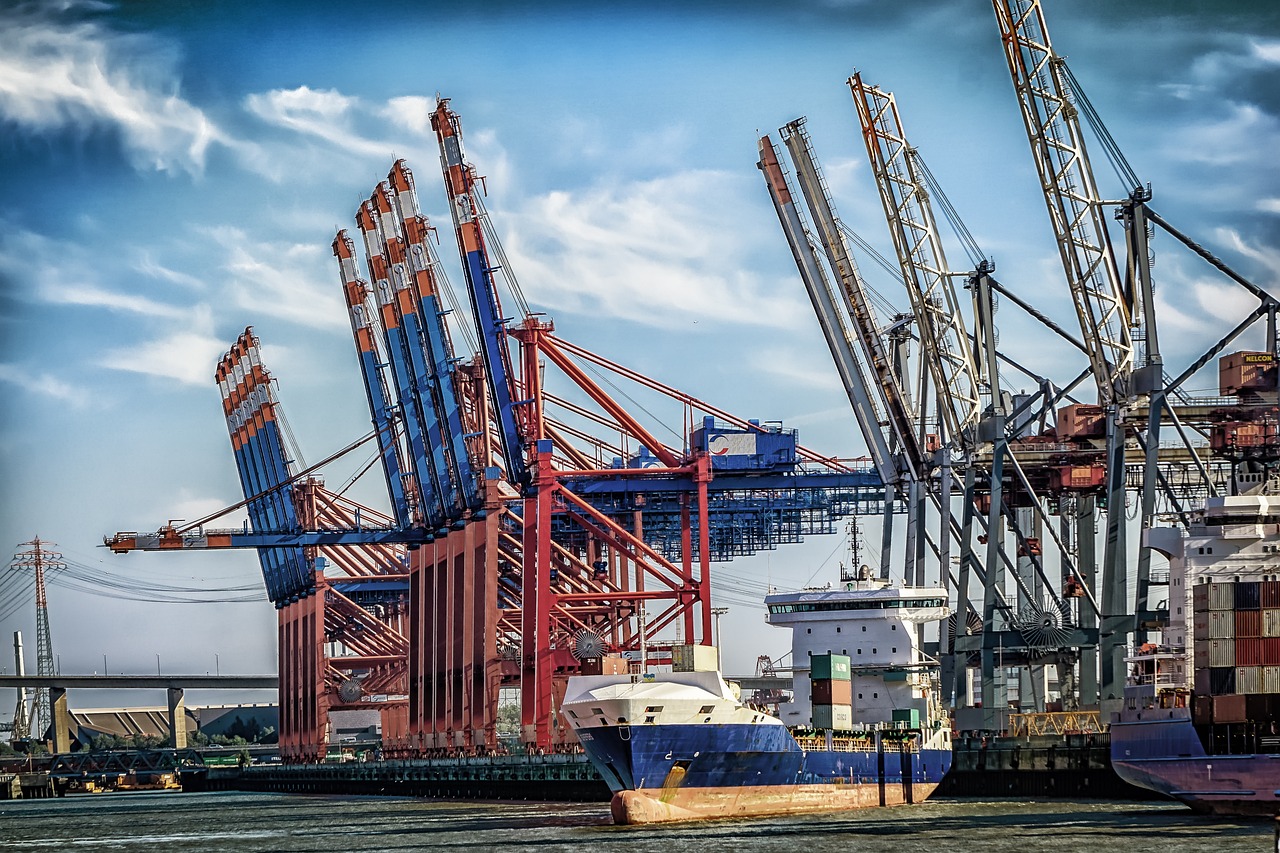
For more coverage of customs procedures and regulatory updates, see our Customs and Compliance section.
What logistics and trade compliance covers
In day-to-day import-export operations, logistics focuses on moving goods efficiently. Trade compliance asks whether that movement is lawful, correctly declared and properly documented. In practice, the two functions overlap at nearly every point in the shipment life cycle.
A customs entry, export filing or partner government agency declaration depends on information that often starts outside the compliance department: product descriptions from merchandising or engineering, purchase values from finance, Incoterms from sales contracts, supplier details from procurement, packing data from warehouses and routing details from freight forwarders. If any of those inputs are incomplete, the customs broker or freight forwarder may have to interpret the transaction under time pressure.
CBP figures show why this matters at scale. U.S. Customs and Border Protection reported in its 2024 Trade Sheet that it processed 38.4 million entries in fiscal year 2024, up from 36.7 million in fiscal year 2023, and processed $3.37 trillion worth of imports. CBP also noted that it upholds approximately 500 trade laws for 49 partner government agencies. Those figures make a practical point: customs compliance is not limited to duty calculation. It also covers product safety, intellectual property, agriculture, forced labor, antidumping and countervailing duties, trade remedies, export controls and supply chain security.
The main compliance checkpoints in a shipment life cycle
A useful compliance program maps controls to logistics events. That avoids a common and costly problem: discovering a classification, license or origin issue only after the shipment has been booked or has reached the border.
| Shipment stage | Compliance question | Operational control |
|---|---|---|
| Supplier onboarding | Who made the product, where was it made and who owns or controls the parties involved? | Collect supplier declarations, screen restricted-party lists and document production locations. |
| Product setup | What is the correct tariff classification, and does the item need a license or special permit? | Maintain approved HS or HTS codes, export control classifications and product attributes in the item master. |
| Purchase order | Do price, Incoterms, assists, royalties or related-party factors affect customs value? | Review terms before order confirmation and align invoice instructions with valuation rules. |
| Booking and routing | Does the route, consignee, end user or destination create sanctions, embargo or diversion concerns? | Screen all parties and review transshipment points before cargo is tendered. |
| Customs filing | Are the declaration data, invoice, packing list, origin and permits consistent? | Use broker instructions, document checklists and exception escalation before submission. |
| Post-entry review | Were duties, taxes, origin claims and admissibility requirements correctly applied? | Audit entries, correct errors where permitted and retain records for the required period. |
The table is intentionally operational. Many companies have compliance policies, but shipment delays often come from missing triggers in the workflow: a purchase order changed after classification, a supplier moved production to a new factory, or a sales team promised delivered-duty-paid terms without confirming who would act as importer of record. The goal is not to slow logistics. It is to make the shipment file ready before speed becomes risky.
Classification, origin and valuation remain the foundation
Three customs topics still drive a large share of trade compliance risk: tariff classification, origin and valuation. They also affect logistics decisions because they influence landed cost, duty exposure, admissibility and documentary requirements.
Tariff classification
The Harmonized System is the global base for product classification, but national tariff schedules add country-specific detail. A six-digit HS code may not be enough for an import entry, trade remedy review or free trade agreement claim. Businesses should control classification at the product master level, not only in the broker’s entry system. Engineering changes, component substitutions and packaging changes can alter classification or duty treatment.
Classification will require special attention before the next major HS update. The World Customs Organization has announced that the HS 2028 edition will enter into force on January 1, 2028. The WCO describes the update as 299 sets of amendments, including new headings and subheadings as well as deleted provisions. Importers and exporters should treat the change as a data migration project, not only a legal update, because product databases, broker instructions, tariff engineering reviews and free trade agreement qualification records may all need revision.
Country of origin
Origin determines more than marking. It can affect preferential duty treatment, trade remedies, procurement eligibility and forced-labor enforcement. Companies often collect origin certificates for finished goods but overlook upstream materials, manufacturing steps or production shifts. That gap is especially risky where substantial transformation, regional value content or tariff shift rules apply.
A defensible origin process should identify the rule being applied, the evidence supporting it and the person or function responsible for keeping it current. For free trade agreements, that means keeping bills of materials, supplier declarations, costed production data and rule-of-origin analysis aligned. For non-preferential origin, it means documenting the manufacturing process clearly enough to support the declared country if customs asks for evidence.
Customs valuation
Valuation problems often begin in commercial arrangements rather than customs forms. Assists, tooling, royalties, commissions, rebates, related-party prices and post-import adjustments can all affect declared value. Logistics teams may not control those terms, but they often transmit the documents that customs sees first. Finance, procurement and trade compliance therefore need a shared process for telling brokers when the invoice price is not the whole customs value story.
Enforcement trends that affect logistics planning
Modern customs enforcement increasingly relies on data, targeting and supply chain transparency. For logistics planners, that means vague product descriptions, inconsistent shipper data or incomplete origin documentation can trigger delays even when the cargo is physically ready to move.
CBP’s 2024 Trade Sheet reported more than 1.4 billion U.S. de minimis shipments in fiscal year 2024, approximately 4 million per day. It also reported that nearly 90% of all shipments coming into the United States entered through the small package environment. That volume helps explain why regulators are paying close attention to low-value parcels, e-commerce platforms, data quality and risk targeting.
Forced-labor enforcement is another area where logistics and compliance intersect. CBP reported that it stopped 4,850 shipments valued at $1.75 billion in fiscal year 2024 on suspicion that the goods were made wholly or partly with forced labor, and that 95% of those stopped shipments involved potential Uyghur Forced Labor Prevention Act issues. For importers, the operational lesson is direct: supplier names and factory addresses are not enough. Companies need traceability evidence that connects finished goods to inputs, production sites and labor-risk controls.
In export operations, the compliance focus shifts to classification under export control rules, restricted-party screening, end-use and end-user review, destination controls and license management. The U.S. Bureau of Industry and Security describes eight elements of an effective export compliance program, while the Office of Foreign Assets Control identifies core components for sanctions compliance such as management commitment, risk assessment, internal controls, testing and training. Even outside the United States, these frameworks are useful benchmarks because freight forwarders, banks, insurers and multinational customers often expect documented screening and escalation procedures. See also: Freight and Logistics.
Digital customs systems are raising the quality bar for shipment data
Trade facilitation and enforcement are moving in the same direction: more data, submitted earlier, in more structured formats. The World Trade Organization’s Trade Facilitation Agreement encourages members to make trade-related information available online and to apply procedures in ways that reduce the time and cost of compliance for traders where practicable. In practice, faster clearance usually depends on stronger data discipline in the private sector.
The European Union’s customs reform shows where this trend is heading. On March 26, 2026, the Council of the EU and the European Parliament announced a political agreement on a major customs reform package. The reform includes an EU Customs Data Hub intended as a single online environment for customs data. The agreed rollout schedule states that the data hub will become operational for e-commerce goods on July 1, 2028, with a phased rollout bringing all goods movements into scope by March 1, 2034. For companies trading with the EU, this creates a long transition window, but not a reason to wait. Item master data, supplier data and shipment event data will need to become cleaner and more consistent.
Digital filing also changes accountability. A broker can transmit a declaration, but the importer or exporter still needs to know whether the underlying data is accurate. Automated systems can reject incomplete fields, but they cannot always detect whether a product was misclassified, whether an origin claim is unsupported or whether an end user creates diversion risk. Good automation depends on good governance.
Building a practical control framework
A workable logistics and trade compliance framework should be risk-based, documented and usable by non-lawyers. It does not need to turn every shipment into a legal project. It should identify where errors are most likely and where the consequences are most serious.
- Create a controlled product master. Maintain approved tariff classifications, product descriptions, origin status, export control classifications and permit indicators in one governed data source.
- Use transaction-level screening. Screen customers, suppliers, consignees, end users, banks and freight parties before shipment, not only during customer onboarding.
- Standardize broker and forwarder instructions. Give service providers written rules for classification, valuation, Incoterms, documents, special programs and escalation contacts.
- Connect procurement with origin evidence. Require suppliers to notify production shifts, material changes and subcontracting before shipment.
- Audit entries and export filings. Review a sample of filed declarations against commercial records and correct recurring errors at the source.
- Train operational teams. Warehouse, sales, purchasing and logistics staff should know which changes require compliance review.
The most effective programs also define stop points. For example, a shipment should not be released to the forwarder if a restricted-party screening hit is unresolved, if a controlled product lacks export authorization, or if a forced-labor risk product lacks traceability documents. Written escalation rules protect both speed and accountability.
Common mistakes that create avoidable delays
Many compliance failures are not caused by ignorance of the law. They are caused by weak handoffs between functions. A logistics team may book cargo using a short product description because it is enough for the carrier, while customs needs a precise description for classification. A supplier may provide a certificate of origin that appears complete, while the trade team has not verified whether the rule of origin was actually met. A sales team may select delivered-duty-paid terms without confirming whether the seller can legally act as importer in the destination country.
Other recurring problems include treating the broker as the owner of classification decisions, using the same HS code across countries without checking national tariff differences, failing to update classifications after product changes, keeping sanctions screening separate from logistics booking, and assuming that low-value shipments carry low compliance risk. The rise of small parcels and data-driven targeting makes that last assumption particularly weak.
A good corrective action process asks three questions after every hold, penalty notice or post-entry correction: what data was wrong, where did that data originate, and what control would have caught it earlier? The answer usually points to master data, supplier governance, contract terms, document templates or escalation procedures.
Frequently asked questions
Is trade compliance the responsibility of the freight forwarder or customs broker?
Forwarders and brokers play an important role, but they usually rely on information supplied by the importer, exporter or seller. The business that controls the product, supplier, value, customer and destination should own the compliance decision-making process and provide clear instructions to service providers.
How often should tariff classifications be reviewed?
Classifications should be reviewed when products change, suppliers change, regulations change or new rulings and tariff amendments become relevant. A periodic review is also useful for high-value, high-volume or high-risk products. The HS 2028 implementation date of January 1, 2028 is a clear future trigger for companies to plan classification updates.
What documents are most important for customs compliance?
The commercial invoice, packing list, transport document, purchase order, origin evidence, product specifications, permits and broker instructions are common core records. Depending on the product, companies may also need test reports, licenses, supplier declarations, bills of materials or forced-labor traceability records.
How can companies reduce customs delays without cutting compliance corners?
The practical answer is earlier data validation. Confirm classification, origin, valuation, screening and permits before booking. Use standard document templates, require complete product descriptions and define escalation rules for exceptions. This improves clearance readiness while preserving a defensible compliance record.
The bottom line for import-export teams
Logistics performance and trade compliance now depend on the same data foundation. Faster ports, digital customs platforms and automated filings do not remove compliance risk; they expose weak data more quickly. Importers and exporters that connect product master data, supplier evidence, shipment planning, screening and post-entry review will be better prepared for regulatory scrutiny and operational disruption.
The practical priority is to move compliance upstream. Before goods are booked, teams should know what the product is, where it comes from, how it is valued, who is involved, where it is going and what evidence supports the declaration. That is where logistics and trade compliance become one workflow rather than two separate responses to the same shipment.