How a trucking and logistics company supports import and export freight
a[data-rs-seo-link]{text-decoration:underline!important;color:#1a56db!important;cursor:pointer!important;}a[data-rs-seo-link]{text-decoration:underline!important;color:#1a56db!important;cursor:pointer!important;}
What shippers should expect from an integrated partner
A trucking and logistics company should do more than move a trailer from one dock to another. For importers, exporters, manufacturers, and distributors, the value is in coordination: matching freight with suitable capacity, planning pickup and delivery windows, managing handoffs, keeping documents aligned, and helping teams respond when ports, borders, warehouses, weather, or demand changes disrupt the original plan. In practice, the right partner reduces uncertainty across the road segment of the supply chain and gives decision-makers enough visibility to manage cost, service, and risk.
This matters because trucking is often the first physical move after production and the final move before a shipment reaches a buyer, warehouse, port, airport, rail terminal, or distribution center. Even when ocean, air, or rail handles the long-distance leg, road freight often determines whether cargo meets the cut-off, appointment, or customer delivery window. For related trade and transport coverage, visit our Freight and Logistics section.

Why trucking still anchors modern freight networks
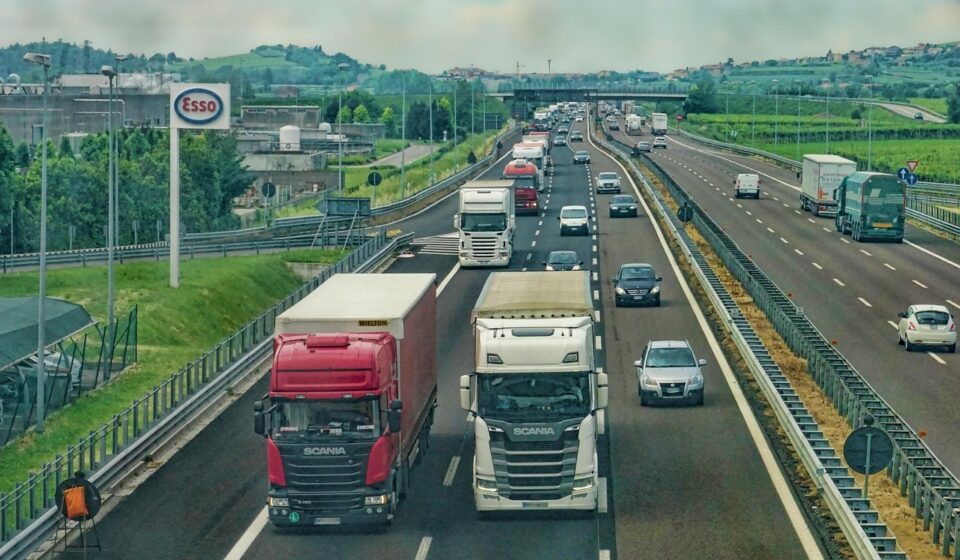
Public freight data helps explain why trucking remains central to import and export planning. In the Federal Highway Administration publication Our Nation’s Highways 2026, Freight Analysis Framework data shows that trucks carried 13.1 billion tons of freight within the United States in 2023, representing 65% of domestic freight by weight. The same source reported 2,483.9 billion truck ton-miles and $18.3 trillion in freight value, equal to 72% of domestic freight value when measured in 2023 dollars.
Cross-border trade shows a similar pattern. The Bureau of Transportation Statistics TransBorder Freight Annual Report 2024, released on March 20, 2025, reported that U.S. freight flows with Canada and Mexico totaled $1.6 trillion in 2024. Trucks moved about $1.03 trillion of that amount, or 64.4% of combined U.S.-Canada and U.S.-Mexico freight value. The truck share was 55.5% for Canada flows and 72.5% for Mexico flows, which helps explain why road capacity, border processes, and appointment discipline are so important on North American trade lanes.
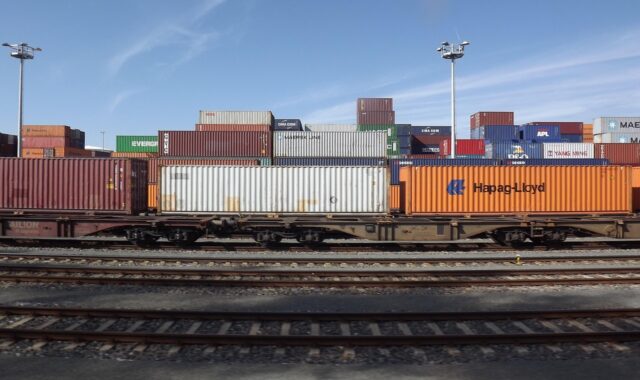
These figures do not mean every shipment should move entirely by truck. Rail may be more suitable for long inland moves with stable schedules, ocean freight carries the bulk of many long-haul international goods flows, and air freight remains important for high-value or time-sensitive cargo. The point is that trucking connects those modes. A container cannot deliver itself from a terminal to an inland warehouse, and export cargo cannot reach a vessel cut-off without reliable pickup, documentation, and dispatch coordination.
| Reference point | What it indicates | Practical implication for shippers |
|---|---|---|
| FHWA domestic freight data for 2023 | Trucks handled the largest share of domestic freight weight and value. | Road capacity and scheduling affect a broad range of supply chains, not only local delivery. |
| BTS transborder freight data for 2024 | Trucks moved the majority of U.S. freight value with Canada and Mexico. | Cross-border shipments require strong carrier, customs, and appointment coordination. |
| CSCMP 2026 State of Logistics report | U.S. business logistics costs were reported at $2.4 trillion, or 7.8% of GDP. | Transportation decisions should be evaluated as part of total landed cost, not only the freight rate. |
| FMCSA electronic logging device guidance | ELDs record driving time and support records of duty status for covered operations. | Transit planning must respect driver hours, handoff timing, and realistic appointment windows. |
Core services that connect trucking with logistics
A carrier can provide trucks. A logistics partner connects trucking with the planning, information flow, and exception management around the move. That difference matters for businesses shipping across multiple lanes, modes, suppliers, or customer delivery rules.
| Service area | What it involves | Why it matters |
|---|---|---|
| Truckload and less-than-truckload planning | Matching shipment size, delivery timing, freight class, accessorial needs, and lane requirements to the right service type. | Prevents paying for the wrong capacity model or creating avoidable handling risk. |
| Drayage and port pickup | Moving containers between ports, rail ramps, yards, and warehouses. | Helps importers control demurrage, detention, terminal appointments, and container return timing. |
| Cross-docking and consolidation | Combining or separating freight to improve routing, reduce touches, or support faster redistribution. | Useful when purchase orders, sales orders, and transport units do not naturally match. |
| Warehousing coordination | Aligning dock schedules, storage capacity, labor availability, and inventory visibility with transportation plans. | A truck appointment is only reliable if the warehouse can receive or load on time. |
| Freight brokerage and capacity sourcing | Finding qualified capacity across lanes, seasons, equipment types, and service levels. | Adds flexibility when demand changes or owned assets are not available. |
| Exception management | Monitoring delays, missed appointments, damaged freight, documentation issues, and route disruptions. | Turns problems into managed events instead of surprises discovered after the fact. |
For import and export teams, the strongest setup is usually not the largest menu of services. It is the cleanest chain of responsibility. A provider should be able to explain who confirms pickup, who controls the appointment, who receives shipment updates, who handles exceptions, and who closes the file after proof of delivery or container return.
The operating model that separates logistics from simple transportation
Planning before dispatch
Effective freight planning begins before a truck is assigned. A useful provider will ask about commodity type, packaging, pickup constraints, delivery windows, hazardous material status if applicable, temperature requirements, liftgate or dock limitations, cargo value, customs documents, and whether the move is tied to a port, rail, or air schedule. These questions are not administrative noise. They determine equipment choice, routing, insurance checks, accessorial charges, and service feasibility.
An import container is a simple example. The road move may look short on a map, but the actual plan depends on terminal availability, free time, chassis supply, driver hours, warehouse receiving windows, and empty return rules. If those details are not coordinated early, a low linehaul quote can become expensive through waiting time, storage, missed cut-offs, or re-delivery.
Visibility and exception management
Visibility is often described as tracking, but tracking alone is not enough. A shipment status is useful only if someone can act on it. A professional logistics process should define milestones such as tender accepted, truck dispatched, arrival at pickup, loaded, departed, border or terminal event, arrival at delivery, unloaded, proof of delivery received, and invoice audited. For international cargo, milestone discipline also helps align the inland move with forwarder updates, customs release status, and warehouse labor planning.
The 30th Annual Third-Party Logistics Study summarized by Penske Logistics highlights a broader industry shift from transactional relationships toward more strategic shipper and 3PL relationships, with technology and data-driven approaches shaping supply chain management. In trucking operations, that trend appears in practical ways: cleaner tender data, faster exception alerts, fewer email-only updates, and better records when a charge or claim is disputed.
Compliance and records
Compliance is another reason shippers should look beyond price. In the United States, the Federal Motor Carrier Safety Administration explains that an electronic logging device synchronizes with a vehicle engine to automatically record driving time and support records of duty status for covered operations. FMCSA also notes that the ELD rule does not change the basic hours-of-service rules. The shipper’s takeaway is straightforward: unrealistic loading windows, excessive detention, and last-minute schedule changes can create service risk because legal driving time is a real operational constraint.
Other checks may include operating authority, insurance, safety performance, cargo handling rules, hazardous material qualifications where relevant, and security procedures for high-value goods. Not every shipment needs the same level of scrutiny, but a repeat trade lane should have documented requirements rather than relying on informal assumptions.
How to evaluate a trucking and logistics company
The evaluation process should start with lane fit and operational fit, not with a generic claim about national coverage. A company may be excellent in regional retail distribution but poorly suited for port drayage. Another may be strong in cross-border truckload but weak in appointment-heavy retail deliveries. Matching the provider to the lane, freight profile, and service risk is more important than choosing the most familiar name.
- Lane experience: Ask which origin-destination pairs the provider handles regularly and where it relies on partners.
- Mode capability: Confirm whether the provider manages truckload, LTL, drayage, intermodal, expedited, temperature-controlled, or specialized equipment as needed.
- Asset and non-asset model: Understand whether the company uses its own equipment, brokered capacity, contracted carriers, or a mix.
- Visibility process: Ask which milestones are tracked, how exceptions are communicated, and whether updates are proactive or request-based.
- Compliance controls: Review how carrier qualification, driver hours, safety documentation, insurance, and cargo requirements are managed.
- Documentation discipline: Confirm how bills of lading, packing information, proof of delivery, customs-related data, and invoice support are handled.
- Claims and escalation: Ask who investigates damage, shortage, delay, or charge disputes and how quickly evidence is gathered.
- Scalability: Test whether the provider can handle seasonal peaks, supplier changes, new markets, or temporary surge capacity.
A request for proposal can help, but it should not be only a rate sheet exercise. Include sample shipments, real appointment rules, packaging details, accessorial expectations, and service failures that have occurred in the past. The better the input, the more meaningful the provider response will be. See also: Customs and Compliance.
Cost, service, and risk trade-offs
Freight buyers often compare transportation offers by price per mile, price per pallet, or price per container. Those metrics are useful, but they can hide the real cost of service failure. A late port pickup may create storage charges. A missed export cut-off may roll cargo to a later sailing. A driver waiting at an unprepared dock can trigger detention. A rushed carrier choice may increase cargo damage, theft exposure, or paperwork errors.
The Bureau of Transportation Statistics Latest Supply Chain and Freight Indicators explains that truck spot rate data reflects spot market loads and notes that the spot market is approximately one-tenth of the overall common carrier trucking market. That context matters because spot rates can be useful signals, but they do not fully describe contract freight, dedicated operations, private fleets, or specialized service requirements. Shippers should avoid treating spot movement alone as a complete picture of trucking cost.
Several pricing models are common. Spot pricing can help when demand is irregular or when a new lane is being tested. Contract pricing can improve budget control on predictable lanes. Dedicated capacity may be appropriate when freight volume, service rules, or equipment needs justify committed resources. Intermodal solutions can reduce cost on some longer inland lanes, but they require schedule tolerance and careful first-mile and final-mile coordination.
The right trade-off depends on product margin, customer promise, cargo value, lead time, inventory strategy, and disruption tolerance. Low-cost transportation is not automatically wrong, but it must be measured against the cost of delay, stockout, penalty, or lost customer confidence.
A practical workflow for import and export shipments
A structured workflow reduces confusion between the shipper, logistics provider, carrier, warehouse, forwarder, customs broker, and customer. The following sequence can be adapted to most road freight moves connected to international trade.
- Define the shipment profile: List commodity, packaging, dimensions, weight, cargo value, temperature needs, hazard status if applicable, and handling limits.
- Confirm commercial and transport responsibilities: Align purchase order terms, delivery obligation, insurance expectations, and who controls each leg of the move.
- Check documents early: Coordinate bill of lading details, packing list information, customs data, delivery references, appointment numbers, and container or seal information.
- Match service level to risk: Decide whether the shipment needs standard truckload, LTL, team service, expedited transport, drayage, cross-dock support, or special equipment.
- Book with realistic timing: Include loading time, terminal time, border or gate processes, driver hours, traffic risk, and warehouse receiving rules.
- Monitor milestones: Track tender acceptance, dispatch, pickup, departure, intermediate events, delivery, unloading, proof of delivery, and any container return.
- Close the loop: Audit charges, record service issues, update lane assumptions, and share lessons with procurement, operations, and sales teams.
This workflow is especially useful when suppliers and customers are in different time zones or when multiple parties use different systems. The aim is not to create paperwork for its own sake. It is to make sure every party is working from the same facts before a truck is late, a document is missing, or a customer asks for an update.
Frequently asked questions
Is a trucking and logistics company the same as a 3PL?
Not always. A trucking company may focus mainly on operating or arranging trucks. A third-party logistics provider usually manages a wider set of logistics functions, which may include transportation management, warehousing coordination, brokerage, reporting, and network planning. Some companies do both, while others specialize in one area.
Should importers use one company for trucking, warehousing, and forwarding?
A single provider can simplify communication, but it is not automatically the right answer. The decision should depend on lane complexity, service quality, system visibility, cost transparency, and accountability. Some shippers benefit from one integrated provider, while others prefer separate specialists with a clear control tower or internal logistics team.
What documents should be aligned before pickup?
At minimum, teams should align the bill of lading, pickup and delivery addresses, contact information, reference numbers, cargo description, weight, piece count, appointment requirements, and any customs or port-related data. International shipments may also require commercial invoices, packing lists, certificates, entry data, release status, or other documents depending on the product and jurisdiction.
How can smaller shippers improve service without large freight volumes?
Smaller shippers can improve outcomes by providing accurate shipment data, avoiding last-minute tenders when possible, consolidating predictable freight, respecting appointment times, documenting accessorial rules, and building relationships on lanes where they ship repeatedly. Reliability as a customer can be a real advantage, even without the volume of a major account.
For an import or export operation, the strongest trucking and logistics company is not simply the one with the lowest quote or the broadest marketing claim. It is the provider that understands the lane, plans around real constraints, communicates exceptions early, maintains compliance discipline, and helps the shipper make better decisions across cost, service, and risk.