Rhenus freight logistics for importers and exporters in 2026
a[data-rs-seo-link]{text-decoration:underline!important;color:#1a56db!important;cursor:pointer!important;}a[data-rs-seo-link]{text-decoration:underline!important;color:#1a56db!important;cursor:pointer!important;}
What Rhenus freight logistics means in 2026
Rhenus freight logistics is not a single transport product. For importers and exporters, it is better understood as a provider portfolio covering air and ocean forwarding, overland transport, port logistics, warehousing, customs-related services and, where needed, 4PL coordination. Rhenus’s 2025 sustainability report describes a global network of 70+ countries, 1,300+ locations, 39,000 employees and €8.2 billion annual turnover. Its U.S. materials describe ocean, air, road, warehousing and customs-related offerings. That scale can help shippers planning multimodal flows, but it does not replace lane-level due diligence on route coverage, local licensing, cargo liability, documentation responsibility and service levels before booking. For broader context, see our freight and logistics section. (rhenus.group)
Company profile and service scope
Rhenus is a family-owned German logistics group with roots in inland waterway transport on the Rhine in 1912. Its reported structure is broader than that of a traditional freight forwarder: the group operates across forwarding, contract logistics, overland transport, port logistics, automotive logistics and fourth-party logistics. For trade teams, the practical point is that one provider may be able to coordinate several parts of a shipment lifecycle. The exact service, however, still depends on the country entity, route, cargo type and contract terms. (rhenus.group)
| Verified public point | Why it matters for importers and exporters |
|---|---|
| Rhenus reported 70+ countries, 1,300+ locations and 39,000 employees in its 2025 sustainability report. (rhenus.group) | A wide network may help when freight moves across regions, but local office capability should still be checked lane by lane. |
| The Air & Ocean division covers air freight, sea freight, intermodal and multimodal transport, including FCL, LCL, charter and consolidation options. (rhenus.group) | Shippers can compare full-container, less-than-container and air solutions instead of treating every shipment as a single-mode move. |
| The Port Logistics division reports more than 70 terminals across over 40 sea and inland ports. (rhenus.group) | Port and hinterland capability is relevant for bulk, breakbulk, container, hazardous and oversized cargo flows. |
| The U.S. Rhenus page describes ocean freight, air freight, road transport, port logistics, warehousing, 4PL and customs-related services. (rhenus.group) | U.S.-linked shippers should confirm which entity contracts the shipment and which services are performed directly or through partners. |
Core services to evaluate before booking
Air and ocean forwarding
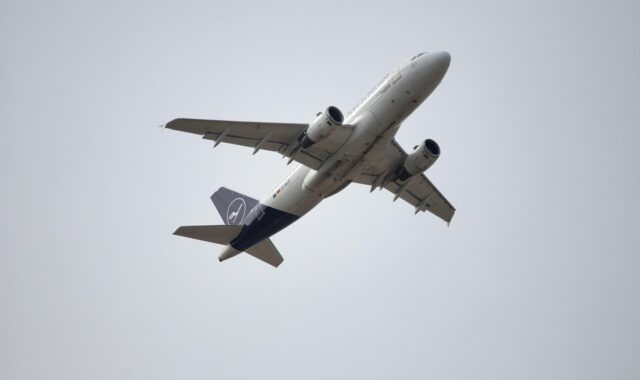
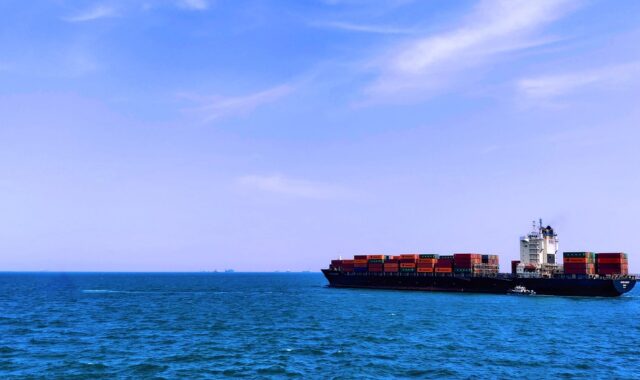
The main search intent behind Rhenus freight logistics is usually service discovery: a shipper wants to know whether Rhenus can move goods internationally and which modes are available. Public Rhenus materials indicate that ocean freight includes FCL, LCL, charter and consolidation options, while air freight includes services for time-critical cargo such as charter and on-board courier arrangements. That makes Rhenus relevant to both planned replenishment and urgent exceptions. Price and transit time should still be tested against actual sailing schedules, carrier allocations, airport capacity and customs readiness. (rhenus.group)
Overland, port and inland connections
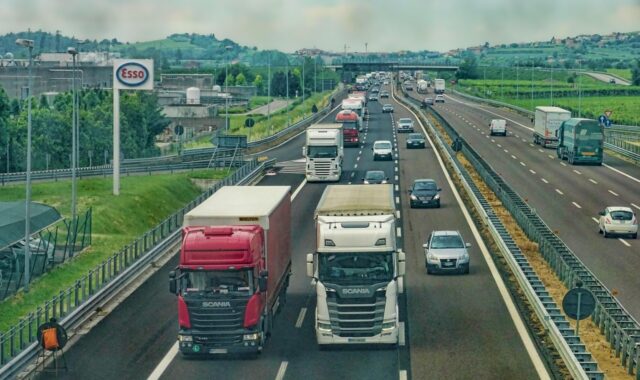
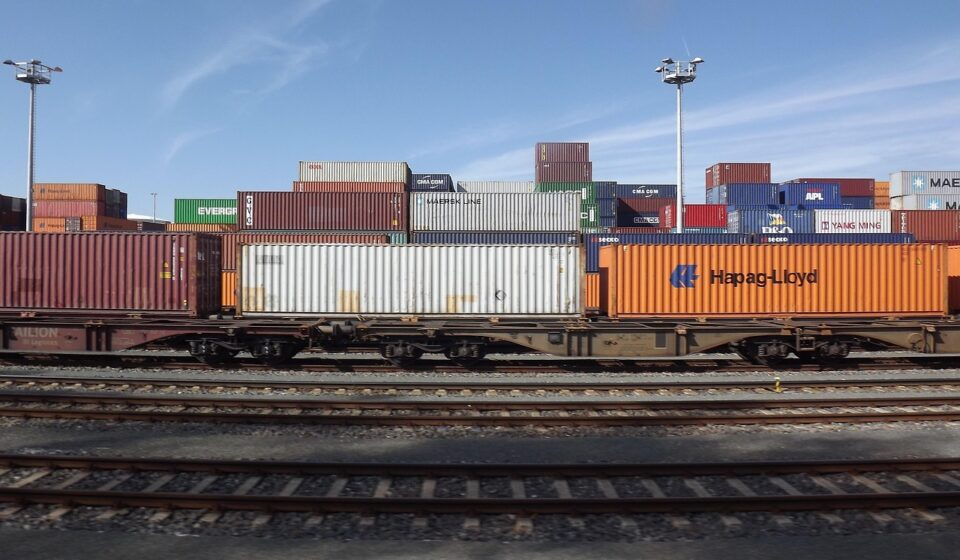
International freight rarely ends at the port or airport. Rhenus’s own reporting describes road, rail, river, sea and air transportation, along with port operations and overland transport. This matters for importers managing inland drayage, consolidation, distribution center delivery or cross-border road legs. A forwarder with inland options may reduce handoff friction, but the commercial value depends on whether the provider controls assets on the lane, uses contracted carriers or coordinates third-party capacity. That distinction should be clarified during the quotation stage.
Warehousing and contract logistics
Contract logistics becomes important when cargo needs storage, inspection, kitting, labeling, returns processing or staged release after import. Rhenus’s 2025 sustainability report says its Contract Logistics division offers warehousing, fulfillment and value-added services, with models ranging from dedicated warehouses to multi-user facilities. For traders, the key question is not only whether warehousing is available, but whether the facility fits the product. Temperature requirements, batch traceability, hazardous goods rules, e-commerce order profiles and bonded storage needs can all affect suitability. (rhenus.group)
4PL coordination and visibility
Rhenus also presents 4PL as a service that coordinates transport, warehousing and third-party providers through control tower and IT systems. A 4PL model can be useful when a shipper has multiple factories, suppliers, forwarders or destination markets and needs one planning layer. It is not always necessary for simple spot shipments. Importers and exporters should ask what data will be visible, how exceptions are escalated, who owns milestone accuracy and whether invoices are audited against agreed rates. (rhenus.group)
Why recent network moves matter for trade lanes
Rhenus’s network development matters because forwarder capability changes when providers add corridors, terminals or regional coverage. On 30 September 2026, Rhenus announced next steps for a planned trimodal container terminal project at Aktau on the Caspian Sea with the Port of Aktau and Kazakhstan Temir Zholy. The announcement said the planned site would be at least 30 hectares and could add at least 150,000 TEU of annual handling capacity, subject to project development and feasibility work. The limitation is important: the announcement signals strategic intent and planned capacity, not completed operating capacity. (rhenus.group)
The Aktau project also matters because it sits within the Trans-Caspian International Transport Route, often discussed as a Middle Corridor link between China, Central Asia, the Caspian region and Europe. Rhenus stated that it had expanded in Kazakhstan at the beginning of 2026 through the acquisition of a rail-connected terminal in the Almaty region. For exporters and importers, the commercial implication is that Central Asia may become more relevant in route design, especially for companies seeking alternatives to traditional long-distance ocean routings. Route reliability, however, still depends on border processes, rail capacity, port performance, documentation and geopolitical risk. None of those should be assumed from a single terminal announcement. (rhenus.group)
Latin America is another region to watch. Rhenus announced on 23 April 2025 that Blu Logistics LATAM would rebrand to Rhenus Logistics after its 2023 acquisition, with operations under the Rhenus name in Argentina, Colombia, Ecuador, Mexico, Paraguay and Uruguay, complementing existing activities in Argentina, Brazil, Chile, Colombia and Mexico. The same announcement reported more than 210,000 TEU in combined 2024 full-container operations for Rhenus Logistics LATAM and Blu Logistics LATAM. For shippers, this points to a stronger regional forwarding platform, but individual country coverage, customs brokerage relationships and warehouse availability still need direct confirmation. (rhenus.group)
Market context for 2026 freight planning
Freight decisions in 2026 are being made in a trade environment that is growing, but uneven. On 8 October 2026, the World Trade Organization said it expected world merchandise trade volume to grow 3.9% in 2026 and 4.1% in 2027, up from its March forecast. The WTO attributed part of the stronger first-half performance to demand for AI-related goods such as semiconductors and servers. That does not mean all cargo categories are expanding at the same rate. It does mean shippers should continue to plan capacity carefully, especially in technology, industrial and time-sensitive supply chains. (wto.org)
Digital documentation is also becoming more important. IATA describes the electronic air waybill as part of a broader move toward paperless air cargo processes, and in April 2026 discussed how digitalization and data sharing are reshaping air cargo operations. For exporters using air freight, this is not only an IT issue. Poor master data, late dangerous goods declarations, inconsistent product descriptions or missing consignee details can delay cargo regardless of the forwarder chosen. (iata.org)
Compliance and due diligence questions
A freight forwarder can arrange movement, documentation support and coordination, but it does not remove the shipper’s legal responsibilities. U.S. Customs and Border Protection states that importers remain ultimately responsible for knowing CBP requirements and ensuring that imports comply with federal rules and regulations, even when they use a customs broker. For U.S. ocean transportation, the Federal Maritime Commission explains that ocean transportation intermediaries include ocean freight forwarders and non-vessel-operating common carriers, with licensing and financial responsibility requirements for U.S. trades. (help.cbp.gov) See also: Customs and Compliance.
Before appointing Rhenus, or any other freight logistics provider, importers and exporters should ask operational questions rather than relying on brand scale alone:
- Which legal entity will issue the quotation, contract and transport document?
- Is the provider acting as freight forwarder, NVOCC, customs broker, warehouse operator, 4PL coordinator or a combination of roles?
- Which parts of the shipment are handled by Rhenus offices, and which are subcontracted?
- What Incoterms rule is being used, and who is responsible for export clearance, import clearance, insurance and destination charges?
- Which shipment milestones will be visible, and how quickly are exceptions escalated?
- Are cargo liability limits, warehouse liability and insurance options stated clearly in writing?
- For regulated goods, who verifies classification, licenses, permits, safety data sheets and labeling?
When Rhenus may be a strong fit
Rhenus may be a practical option when a shipper needs more than a simple port-to-port quote. Examples include multimodal Europe-Asia movements, shipments that combine ocean or air freight with warehousing, cross-border road connections, project logistics, industry-specific handling or centralized control tower coordination. The group’s public materials show a broad service portfolio, and recent announcements point to continued corridor development in Central Asia and regional integration in Latin America. (rhenus.group)
Rhenus may be less suitable if a company only needs a one-off spot rate and has no need for warehousing, customs support, visibility tools or complex coordination. In that case, a narrower forwarder or digital freight marketplace may offer a simpler price comparison. The right choice depends on shipment complexity, risk tolerance, trade lane, cargo value, documentation burden and how much operational control the shipper wants to outsource.
Frequently asked questions
Is Rhenus a freight forwarder?
Yes. Rhenus provides freight forwarding services, especially through its Air & Ocean activities, but the group is broader than a forwarder. Its public portfolio also includes contract logistics, overland transport, port logistics, automotive logistics and 4PL coordination. The exact role in a shipment should be confirmed in the quotation and contract documents. (rhenus.group)
Does Rhenus handle U.S. import and export logistics?
Rhenus’s U.S. materials describe services including international freight forwarding, container tracking, customs clearance, air freight, ocean freight, road transport, warehousing and 4PL. The same U.S. page states that its ocean freight offering is supported by an FMC-certified Ocean Transportation Intermediary structure. Shippers should still verify the contracting entity and applicable license or registration for the specific service. (rhenus.group)
What is the difference between freight forwarding and 4PL?
Freight forwarding usually focuses on arranging transport and related documentation for shipments. A 4PL model is broader: it can coordinate several logistics providers, warehouses, transport modes, data flows and performance controls. For small shipments, forwarding may be enough. For multi-site supply chains, 4PL may provide better visibility and governance.
Should small and mid-sized importers consider Rhenus?
They can, especially when the shipment involves multiple modes, customs complexity, warehousing or repeated trade lanes. Smaller importers should compare Rhenus with regional specialists and ask for a clear cost breakdown, including origin charges, main freight, destination charges, customs-related fees, storage risks and insurance options.
What should be checked before signing a freight logistics contract?
Check the legal entity, service scope, Incoterms rule, cargo liability, insurance, customs responsibilities, documentation cutoffs, data visibility, dispute process and subcontracting model. For regulated cargo, also confirm classification, permits, labeling, safety documentation and storage requirements before cargo is collected.