Air freight and logistics in 2026 for importers and exporters

a[data-rs-seo-link]{text-decoration:underline!important;color:#1a56db!important;cursor:pointer!important;}a[data-rs-seo-link]{text-decoration:underline!important;color:#1a56db!important;cursor:pointer!important;}
What importers should know first
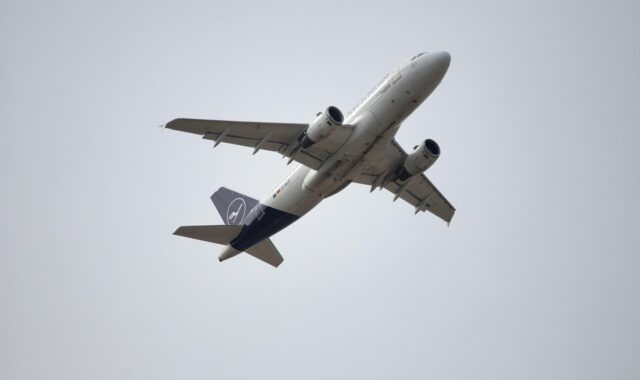
Air freight and logistics are most useful when the cost of delay is higher than the cost of transport. For importers and exporters, that usually means high-value electronics, urgent spare parts, fashion launches, pharmaceuticals, perishables, samples, product recalls or inventory recovery after disruption. The market is still expanding, but demand and capacity are not moving evenly across all lanes. IATA reported that global air cargo demand rose 3.9% year on year in July 2026, after a stronger 8.5% increase in June 2026. That makes planning more important than simply booking the fastest available service.
A practical air freight strategy balances transit time, chargeable weight, documentation quality, customs data, capacity risk and mode choice. Air freight is not a cheaper substitute for ocean shipping. It is a logistics tool for protecting sales, production continuity and service commitments when the business case supports the premium.

Why air freight still matters in global trade
Air cargo moves a small share of global freight by physical volume, but a much larger share by trade value. IATA commonly describes air cargo as carrying more than one-third of world trade by value while representing less than 1% of trade by volume. That difference explains why air freight remains central to import and export logistics even as many companies work to control transport costs.
Aircraft capacity is expensive, but time can be more expensive. If a manufacturer stops a production line because a component is missing, a low freight bill does not solve the problem. If a retailer misses a seasonal launch, the stock may lose value before it reaches stores or customers. If temperature-sensitive goods sit too long on a congested route, the loss may exceed the premium paid for air transport.
Air freight also supports trade models that depend on predictable replenishment. Cross-border e-commerce, repair parts distribution, medical supply chains and just-in-time manufacturing often require smaller, more frequent shipments. In these cases, logistics teams should evaluate total landed cost rather than the freight rate alone. A landed cost view includes duties, taxes, packaging, insurance, inventory holding cost, customs brokerage, warehousing, delivery failure risk and the commercial impact of late arrival.
Current market signals in 2026
As of September 11, 2026, the latest IATA monthly global air cargo release available before publication was July 2026, issued on August 31, 2026. IATA said total demand, measured in cargo tonne-kilometers, increased 3.9% compared with July 2025, while capacity grew 1.7%. Slower capacity growth matters because it can support load factors and keep pressure on space in selected lanes.
The year has not moved in a straight line. IATA reported 8.5% year-on-year demand growth in June 2026, with capacity up 4.4%. By July, the growth rate had cooled, although the market remained positive across all regions. IATA also noted that Asia-Pacific, Europe and North America accounted for more than 90% of the July increase. North American carriers recorded the strongest regional July demand growth at 4.8%, while European carriers grew 4.4% and Asia-Pacific carriers grew 4.1%.
Trade lanes show why averages can mislead importers. In July 2026, IATA reported Asia–North America demand up 9.2% year on year and within-Asia demand up 6.1%. Europe–Asia and Europe–North America were also positive. By contrast, Gulf-linked corridors such as Europe–Middle East and Middle East–Asia were reported in contraction, reflecting continuing disruption linked to conflict in the Middle East. The practical lesson is clear: a global headline rate does not tell a shipper whether space will be available for its exact origin, destination, commodity and service level.
Longer-term forecasts also point to a larger air cargo market, although forecasts should be treated as scenarios rather than guarantees. Boeing’s World Air Cargo Forecast 2024–2043 projects global air cargo traffic to grow about 4.0% annually over that period. The same forecast expects express traffic to grow faster than general cargo, supported by e-commerce and time-definite distribution. For shippers, this suggests that air networks will remain important, while competition for reliable capacity may become more specialized by commodity and lane.
When air freight is the right mode
The best air freight decision starts with the shipment’s commercial purpose. A shipment should not move by air only because it has become urgent. It should move by air because the business case still works after transport, customs, handling and downstream delivery costs are included.
| Shipment situation | Air freight fit | Planning note |
|---|---|---|
| High-value, low-weight goods | Strong | Freight cost is often a smaller share of landed value. |
| Critical spare parts | Strong | Use air to reduce downtime and protect service contracts. |
| Seasonal or launch inventory | Selective | Air can protect a deadline, but margin must support the premium. |
| Bulky low-value goods | Weak | Chargeable weight can make air uneconomic. |
| Dangerous goods or batteries | Possible with controls | Classification, packing, labeling and airline acceptance are critical. |
| Large routine replenishment | Usually limited | Ocean, rail or multimodal options may be better for base volume. |
Many importers use a split-mode strategy. Core replenishment moves by ocean or another lower-cost mode, while a smaller air allocation covers urgent orders, quality replacements, launch quantities or demand spikes. This approach is often more resilient than treating air freight as an emergency-only purchase, because the team can prepare documents, packaging standards and carrier options before pressure builds.
How an international air shipment moves
A typical air shipment has more steps than the flight itself. The process begins with product readiness and export documentation. The shipper or forwarder confirms the commodity, HS code, invoice value, packing details, consignee information, origin rules, export controls and any special handling needs. The shipment is then booked with a forwarder, airline or express operator, depending on the service model.
After pickup, the cargo is consolidated, screened and tendered to the airline or ground handler. The air waybill records the contract of carriage between the shipper or forwarder and the carrier. Where e-AWB is available, IATA describes the electronic air waybill as removing the need to print, handle or archive a paper air waybill, simplifying the air cargo process. In practice, a paperless flow depends on the route, parties, customs environment and data quality.
At destination, the shipment is unloaded, transferred to a cargo terminal, presented for customs clearance and released for final delivery. Delays often happen outside the aircraft movement: missing consignee tax details, mismatched invoice values, vague product descriptions, incorrect HS codes, incomplete licenses, unresolved duties, security holds or special cargo inspections. For this reason, logistics performance should be measured from shipper release to final delivery, not only by airport-to-airport transit time.
Documents, data and compliance checks
Air freight rewards preparation. Because transit time is short, there is less room to fix documentation problems after departure. Importers and exporters should align commercial documents before cargo is collected, especially where customs authorities use advance data for security screening. See also: Customs and Compliance.
- Commercial invoice: Should show seller, buyer, consignee if different, product descriptions, quantities, values, currency, Incoterms, country of origin and reason for export.
- Packing list: Should match piece count, weights, dimensions and package marks.
- Air waybill: Identifies routing, shipper, consignee, carrier, chargeable weight and handling information.
- Licenses or certificates: May be required for controlled goods, food, medical products, dual-use goods, chemicals, cultural items or regulated technology.
- Dangerous goods declaration: Required when the shipment falls under dangerous goods rules, including many lithium battery scenarios.
For shipments to or through the European Union, the Import Control System 2 programme is a major data requirement. The European Commission launched ICS2 Release 2 for air cargo on March 1, 2023, requiring complete Entry Summary Declaration data for goods transported by air to or through the EU, including Norway, Switzerland and Northern Ireland. Commission programme information also set September 1, 2025 as the point when ICS2 safety and security data requirements became fully mandatory across transport modes.
For air cargo entering the United States, Customs and Border Protection uses the Air Cargo Advance Screening programme. CBP rules require specified data for inbound air cargo as early as practicable and no later than before loading onto the aircraft. Separately, U.S. low-value import rules changed materially in 2025 when duty-free de minimis treatment was suspended for shipments from all countries effective August 29, 2025, subject to the scope and exceptions in official rules. Importers should therefore verify entry method, duty exposure and data obligations before relying on older low-value parcel assumptions.
Dangerous goods deserve separate attention. IATA’s Dangerous Goods Regulations are updated annually, and the 67th edition took effect on January 1, 2026. Shippers should not assume that a product is acceptable by air simply because it can move by road or ocean. Lithium batteries, aerosols, chemicals, magnetized materials, dry ice, perfumes and diagnostic samples can create air transport restrictions or require specialized packing and declarations.
Cost and service planning
Air freight pricing is usually based on chargeable weight, which compares actual gross weight with volumetric weight. A large, light carton may be charged on volume rather than scale weight. This is why packaging design can change the economics of an air shipment. Reducing empty space, standardizing carton sizes and palletizing correctly may lower cost and reduce handling damage.
Other cost components can include fuel surcharges, security fees, terminal handling, pickup and delivery, export customs, import brokerage, storage, screening, special handling, insurance and duties or taxes. IATA reported in July 2026 that jet fuel prices were 56.9% higher than a year earlier and 12.2% higher month on month, which illustrates why air freight budgets should allow for surcharge volatility rather than only base rates.
Service selection also matters. Airport-to-airport freight may look cheaper, but the importer must manage trucking, customs and terminal release. Door-to-door forwarding is easier to control but may cost more. Express services can be effective for parcels and small urgent shipments, while general air freight is often better for larger consignments, business-to-business cargo and shipments requiring negotiated handling instructions.
For more background on transport planning across modes, see the site’s Freight and Logistics section.
A practical planning checklist
- Confirm whether the shipment is urgent because of real commercial risk, not only poor internal planning.
- Compare air cost against margin, stockout cost, production downtime or service penalties.
- Check chargeable weight early using final packed dimensions, not product weight alone.
- Validate HS codes, country of origin, customs value and consignee details before booking.
- Identify special cargo requirements such as temperature control, dangerous goods, oversized pieces or high-value security.
- Ask whether the service is airport-to-airport, door-to-airport, airport-to-door or door-to-door.
- Build contingency for fuel surcharge changes, customs holds, weather disruption and security screening.
- Keep a record of actual transit time, cost and exceptions by lane so future decisions are based on evidence.
Frequently asked questions
Is air freight always faster than ocean freight?
Air freight is usually much faster in transit, but total door-to-door time still depends on pickup, export handling, flight availability, customs release and final delivery. For poorly documented shipments, customs or terminal delays can reduce the time advantage.
What is the difference between air freight and air logistics?
Air freight refers mainly to moving cargo by aircraft. Air logistics is broader. It includes booking, documentation, customs data, packaging, screening, warehousing, insurance, delivery planning, compliance and exception management.
Why can the final air freight bill differ from the quote?
Differences often come from final dimensions, chargeable weight, fuel or security surcharges, storage, customs exams, incorrect shipment data, special handling or changes in route and service level. Accurate packed measurements reduce surprises.
Should small importers use air freight for every urgent order?
No. Small importers should reserve air freight for orders where speed protects margin, customer commitments or business continuity. If urgency is recurring, it may be better to adjust forecasting, reorder points or supplier lead times.
What is the biggest documentation risk in air freight?
The biggest risk is inconsistent or vague data across the invoice, packing list, air waybill and customs filing. Product descriptions, values, origin, quantities and consignee details should match before the cargo is tendered.