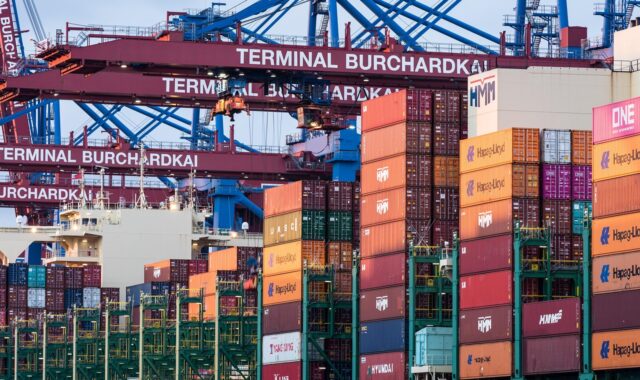
NAFTA imports and exports now operate under USMCA rules
a[data-rs-seo-link]{text-decoration:underline!important;color:#1a56db!important;cursor:pointer!important;}a[data-rs-seo-link]{text-decoration:underline!important;color:#1a56db!important;cursor:pointer!important;}
NAFTA imports and exports are now a USMCA compliance issue
For current shipments, the phrase “NAFTA imports and exports” usually points to a practical question: how do goods moving among the United States, Mexico, and Canada qualify for preferential tariff treatment today? NAFTA no longer governs new preference claims for ordinary current trade. The United States-Mexico-Canada Agreement, known as USMCA in the United States, CUSMA in Canada, and T-MEC in Mexico, entered into force on July 1, 2020 and replaced NAFTA for most customs purposes.
Importers and exporters should therefore avoid relying on old NAFTA certificates or carryover assumptions. They need to classify the product, confirm the applicable USMCA rule of origin, prepare a valid certification of origin when required, and keep records that support the claim.
For more trade compliance context, visit our Customs and Compliance section.
Why the NAFTA search term still matters
NAFTA remains familiar because it shaped North American supply chains for more than two decades. Many companies still use the term internally when discussing cross-border trade lanes, supplier certificates, or duty preference. In a compliance setting, however, the terminology matters. A document labeled as a NAFTA Certificate of Origin is not the same as a USMCA certification of origin, and an old NAFTA sourcing analysis may not support a current entry.
The commercial reality behind the term has not disappeared. U.S.-Mexico and U.S.-Canada trade still includes deeply integrated production in vehicles, machinery, electronics, medical devices, textiles, agriculture, and energy. Parts may cross borders several times before a finished good is imported. That makes origin analysis more important, not less. Preferential treatment depends on whether the good qualifies as originating under the agreement’s rules, not simply whether it was shipped from a USMCA country.
What changed when NAFTA was replaced
The transition from NAFTA to USMCA changed both terminology and compliance mechanics. According to U.S. government trade summaries, NAFTA went into effect in 1994 and was replaced by USMCA on July 1, 2020. CBP guidance also makes clear that goods entered on or before June 30, 2020 were generally handled under NAFTA rules, while current claims require USMCA compliance.
USMCA retained the basic concept of regional preference among the three countries, while updating several areas, including origin procedures, customs administration, digital trade, labor obligations, and provisions aimed at non-market practices. For traders, the most immediate customs change is the origin claim process. USMCA does not require a single official certificate form like NAFTA Form 434. A certification of origin may appear on an invoice or another document, provided it contains the required minimum data elements and adequately describes the originating good.
| Trade measure | Mexico | Canada | Compliance takeaway |
|---|---|---|---|
| 2025 U.S. goods and services trade | $964.1 billion | $872.3 billion | Both relationships are large enough that small documentation errors can create material duty exposure. |
| 2025 U.S. goods exports | $337.3 billion | $333.6 billion | Exporters should support origin statements with product-level records, not broad country assumptions. |
| 2025 U.S. goods imports | $534.3 billion | $381.9 billion | Importers remain responsible for the preference claim made at entry. |
| September 2026 U.S. goods trade snapshot | $96.3 billion total trade | $64.8 billion total trade | U.S. Census Bureau monthly goods data ranked Mexico first and Canada second for that month. |
The figures above combine annual USTR trade summaries with the U.S. Census Bureau’s September 2026 goods table. They show why North American origin compliance is not a niche task. It affects high-volume trade lanes where importers, exporters, customs brokers, suppliers, and finance teams need consistent documentation.
The rule that decides preference is origin, not geography
A common mistake is to treat “made in Canada,” “made in Mexico,” or “shipped from the United States” as enough for duty preference. USMCA is more specific. A good must satisfy the applicable rule of origin and all relevant procedural requirements. Depending on the product, this may involve tariff shift rules, regional value content, product-specific requirements, or sector-specific rules used for automotive, textile, or apparel goods.
For U.S. imports, the Harmonized Tariff Schedule and USMCA General Note 11 are central references for product-specific origin rules. In practice, a company should begin with the product’s correct HS or HTS classification. Once classification is confirmed, the applicable origin rule can be tested against the bill of materials, production records, supplier inputs, and manufacturing process.
What a USMCA certification should contain
CBP guidance states that USMCA certification is not tied to a mandatory official form, but it must contain nine minimum data elements. These include the certifier, exporter, producer, importer, description and HS classification of the good, origin criterion, blanket period if used, and authorized signature and date. The certifier may be the importer, exporter, or producer, but the party making the statement must have a reasonable basis for the claim.
This flexibility can reduce paperwork, but it also creates risk. A short statement on an invoice may be valid only if it includes the necessary data and is backed by records. A blanket certification can help with recurring shipments, but it should be reviewed when sourcing, production location, supplier inputs, or classification changes.
When a certification may not be required
CBP’s USMCA guidance recognizes limited exceptions, including certain non-commercial importations and certain commercial importations of originating goods valued at no more than US $2,500, provided the shipment is not part of a series arranged to avoid the rules. This should not be treated as a general exemption from customs compliance. The importer may still need a written statement or other support if CBP questions whether the goods originate.
A practical workflow for importers and exporters
Importers and exporters should manage USMCA preference as a controlled process, not as a label added at the end of shipping. A practical workflow includes five steps. See also: Freight and Logistics.
- Classify the product correctly. The rule of origin depends on the HS or HTS classification. If the classification is wrong, the origin analysis may also be wrong.
- Identify the applicable USMCA rule of origin. Do not assume that the NAFTA rule is identical. Some product areas changed, and sector-specific rules can be detailed.
- Map the supply chain. Review where materials are produced, where substantial processing occurs, and whether non-originating inputs affect eligibility.
- Prepare or collect the certification of origin. Make sure the certification includes all required data elements and is consistent with the commercial invoice, purchase order, and entry data.
- Maintain records and monitor changes. Keep supplier declarations, bills of material, production records, cost calculations, and communications that support the claim.
For importers, the key issue is liability. Even if the exporter or producer supplies a certification, the importer making the claim at entry should be prepared to prove that the claim was reasonable. For exporters, the risk is both commercial and legal. Customers may rely on the exporter’s certification to claim preference, so unsupported statements can lead to disputes, chargebacks, or customs inquiries.
The 2026 joint review adds uncertainty but does not end current rules
USMCA contains a formal review mechanism. On July 1, 2026, the United States, Mexico, and Canada conducted the first joint review of the agreement. USTR stated on that date that the United States did not agree to renew USMCA in its current form for a new term. Importantly, USTR also stated that the agreement remains in force pending resolution of the issues or until termination.
That distinction matters for customs teams. The July 2026 review did not allow traders to return to NAFTA documents, nor did it mean that USMCA preference claims stopped overnight. As of this article’s publication date, companies should continue applying current USMCA rules while monitoring official changes, future review steps, and any country-specific tariff actions that may affect landed cost.
USTR later opened a public comment process for the 2027 joint review, with a January 12, 2027 deadline for submissions. That points to continued policy activity around North American trade. The practical business response is not to predict the final outcome, but to strengthen documentation now. Companies with weak origin files will be less prepared for either stricter enforcement or negotiated rule changes.
Common compliance mistakes to avoid
- Using an old NAFTA certificate for a current USMCA claim. CBP guidance says Form 434 is not accepted for USMCA preferential treatment claims.
- Assuming shipment origin equals product origin. A product shipped from Mexico or Canada may still contain non-originating materials that prevent qualification.
- Skipping classification review. Origin rules are tied to classification, so classification errors can invalidate preference analysis.
- Relying on supplier statements without support. A supplier letter is useful, but it should connect to bills of material, production facts, and the applicable rule.
- Ignoring other duties and controls. USMCA preference does not automatically remove antidumping duties, countervailing duties, product safety rules, partner government agency requirements, or separate trade remedy measures.
- Not updating blanket certifications. A valid certification can become unreliable if sourcing, costs, production steps, or tariff classification changes.
What businesses should do next
Companies that still use the phrase NAFTA imports and exports should treat it as a prompt to audit their internal process. Replace outdated templates, confirm that teams use USMCA terminology, and review whether current certifications contain the required data. For high-volume products, build a product-by-product origin file that includes classification, the applicable rule, supplier evidence, and the reasoning behind the claim.
For importers, the stronger practice is to review preference eligibility before entry, not after liquidation or an audit inquiry. For exporters, the stronger practice is to issue origin certifications only when the company has sufficient information to support them. For both sides, the 2026 review reinforces the need for flexible compliance systems. Even while USMCA remains in force, policy attention on North American trade is high, and documentation quality can determine whether preferential treatment is a benefit or a liability.
Frequently asked questions
Is NAFTA still valid for imports and exports?
For current ordinary preference claims, NAFTA has been replaced by USMCA. NAFTA may still appear in historical records for goods entered before the transition, but new preference claims should be handled under USMCA rules.
Can a company still use a NAFTA Certificate of Origin?
No for current USMCA preference claims. CBP guidance says the old NAFTA Form 434 is not accepted for USMCA preferential treatment. A USMCA certification of origin must include the required minimum data elements, although it does not need to follow one mandatory official form.
Does every shipment from Canada or Mexico qualify for duty-free treatment?
No. The product must qualify as originating under the applicable USMCA rule and satisfy the relevant procedural requirements. Other duties, trade remedies, or agency rules may also apply depending on the product.
Who can complete a USMCA certification of origin?
The certification may be completed by the importer, exporter, or producer, provided the certifier has information showing that the good qualifies as originating. The importer should still maintain support for any preference claim made at entry.
Did the 2026 USMCA review terminate the agreement?
No. USTR stated on July 1, 2026 that the United States did not agree to renew USMCA in its current form, but also stated that the agreement remains in force pending resolution of issues or termination. Businesses should continue following current USMCA requirements while monitoring official updates.